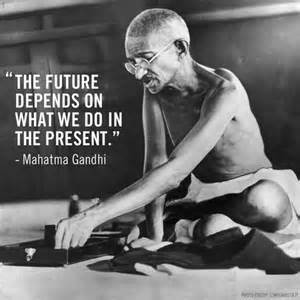
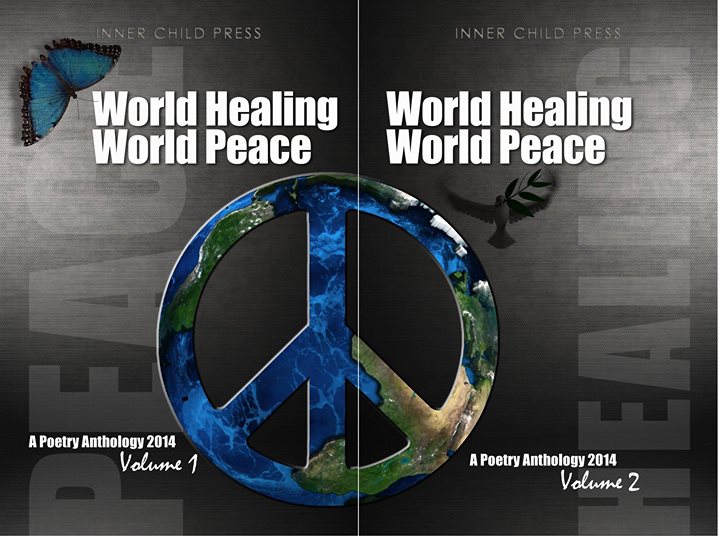
The -ism to which I am referring in the title happens to be Islamism (this time, under the threat of Boko Haram) but the term may (and will easily) be replaced by any other ideological fixation the world has produced thus far. As for the quoted part, “the new normal,” I have borrowed it from the heading of a CNN commentary by John D. Sutter. The content of my post, however, has no echos whatsoever of the said article. In fact, I prefer to omit a recapping of the related news in any of its details, as they are widely known at this point in time. What I like to highlight, instead, is my own entrancement with an -ism: idealism, that is. Just when I thought I had left behind my idealist stance to life in my early to late teen years, with their cruelty and my heightened sense of helplessness, world events of our so-called modern times capture my entire being to pain me inside now more than ever before. I take violence practiced on the innocent personally. I often find myself shouting out loud the same command: Enough already! Only to retreat to a safe ground – my writing. Still, refusing to rule myself out of the equation – for being physically uninvolved in efforts to alter humanity’s self-destructive matters, I put myself to work as an archeologist of literary relics. In passionate engagement, I then attempt to contribute – on text – to the revitalization of centuries-old philosophical teachings toward an alternative: the opposite of barbarism. I have done so most recently in a paper that functioned as an epilogue to a two-volume book publication, World Healing World Peace Poetry 2014 by Inner Child Press, ltd. (I have already shared with you my poem contribution, “even time and space united“) – that are hoped to reach the hands of the member nations of the United Nation and the voting members of the U.S. Congress. Today, I am inviting you to my rather expansive “few words” in the said publication (released on April 1st, 2014) – exactly as my text appears in the books:
The 30th anniversary of the founding of the United Nations was marked, among other tributes across the globe, by the Cantata An die Nachgeborenen, op. 42 Gottfried von Einem had composed to honor the international organization’s mission. On the 24th of October 1975, New York hosted the premiere of this opus for which the source was the poem, “An die Nachgeborenen” (“To Those Who Follow Our Wake”) by Bertolt Brecht. This three-part poetic construct evidences the author’s allusions to the terror-filled Thirty-Years War and World War I. The intensification of the battle forces across Europe in 1939 – the time when the Brechtian verses are known to have surfaced, the looming sufferings of World War II seem transparent to the poet. He thus resorts in this timeless piece to the collected wisdom of humanity and alerts the next generations of readers against silence in face of adversity:
Truly, I live in dark times!
An artless word is foolish. A smooth forehead
Points to insensitivity. He who laughs
Has not yet received
The terrible news.
What times are these, in which
A conversation about trees is almost a crime
For in doing so we maintain our silence about so much wrongdoing!
And he who walks quietly across the street,
Passes out of the reach of his friends
Who are in danger?
[…]
The poem’s second part uncovers Brecht’s tragic confession, as “[t]he time given to [him] on earth” has passed with him failing to reach the goal for humanity: the spread of knowledge against the infectious mentality behind the war. His verses in the last part, then, assume the tone of a will. The author pleads yet once again with the arriving generations for their retreat from the conflicts of the world, in remembrance of the senseless violence and terror of life the war inflicts on humanity:
You, who shall resurface following the flood
In which we have perished,
Contemplate –
When you speak of our weaknesses,
Also the dark time
That you have escaped.
For we went forth, changing our country more frequently than our shoes
Through the class warfare, despairing
That there was only injustice and no outrage.
And yet we knew:
Even the hatred of squalor
Distorts one’s features.
Even anger against injustice
Makes the voice grow hoarse. We
Who wished to lay the foundation for gentleness
Could not ourselves be gentle.
But you, when at last the time comes
That man can aid his fellow man,
Should think upon us
With leniency.
For Brecht, one of the most critically acclaimed world poets of German birth, to offer an autopsy of systematic programs of silencing and mass destructions seems ironic. For, the English word ‘war’ originates from ‘Werran’ in the Old High German language (‘Werre’ in Old English). As for its etymological meaning, the word’s outreach capacity disappoints: to confuse or to cause confusion. In its political context, however, it reveals a state of armed conflict; or, as Carl von Clausewitz, the Prussian military analyst defines it, “continuation of politics carried on by other means.”
Conflicts carried on by arms – whether in a state of confusion – have been an integral element of world history. Before what became to be the first recorded war between Sumer and Elam in 2700 BCE, tribes had been fighting against one another for thousand of years. The historian, Simon Anglim notes:
A tribe is a society tracing its origin back to a single ancestor, who may be a real person, a mythical hero, or even a god: they usually view outsiders as dangerous and conflict against them as normal. The possession of permanent territories to defend or conquer brought the need for large-scale battle in which the losing army would be destroyed, the better to secure the disputed territory. The coming of ‘civilization’ therefore brought the need for organized bodies of shock troops.
Inherent in the dichotomic ‘self’ and ‘other’ relation, therefore prompting fear of a different culture the tribe mentality has been known to often result in war, when a desire to expand was present. With the advancing of technology, war – as can be observed further, spread confusion throughout the ages, indeed reflecting the origins of the word.
While war continues to be a frequent extension of political disputes in the 21st century, as not only stimulated but also justified by the ancient tribe mentality, history of literature throughout time accentuates teachings to the contrary. As early as in the era of the Latin poet Albius Tibullus (ca. 55 BC – 19 BC), humanity’s capacity for self-destruction has been questioned and the passionate call for peace has been recorded:
War is a Crime
Whoe’er first forged the terror-striking sword,
His own fierce heart had tempered like its blade.
What slaughter followed! Ah! what conflict wild!
What swifter journeys unto darksome death!
[…]
Come blessed Peace!
Come, holding forth thy blade of ripened corn!
Fill thy large lap with mellow fruits and fair!
Elegies, Book I, Number XI
Who was he, who first forged the fearful sword?
How iron-willed and truly made of iron he was!
Then slaughter was created, war was born to men.
Then a quicker road was opened to dread death.
[…]
What madness to summon up dark Death by war!
It menaces us, and comes secretly on silent feet.
[…]
Then come, kindly Peace, hold the wheat-ear in your hand,
and let your radiant breast pour out fruits before us.
Elegies, Book I, Number X
Literary history offers untiring pleas to humanity against the adoption of the tribe mentality and implores world’s attention to the anguish of the people during and after the wars preceding our lifespan. Advanced technology with its growingly more destructive products continues to rule over the 21st century. Opposing nations or combating groups within the same national structures are resolved to leave ensuing centuries their violence-conditioned inheritance. Voicing the obvious anew seems to be of vital importance at our times when there still is an audience. “[S]o why do I tell you/anything?” reads the first line in the last stanza of the Adrienne Rich (1929-2012) poem, “What Kind of Times Are These.” The poet further composes: “Because you still listen, because in times like these/to have you listen at all, it’s necessary/to talk about trees.” The intent behind Rich’s lyrical work is, as to be expected, not to “talk about trees” but rather, through an imagined common language, to arrive at human love. In the commitment to get to human love – the pivotal subject of any personal or social order, lies the inspirational seed of the World Healing World Peace 2014, a Poetry Anthology. The heart and mind behind it can best be told – yet once again – within the framework of literature and its role that is as vital as life itself.
The name of a French dramatist, novelist and essayist is marked as the first writer in Europe to raise his voice against the war: Romain Rolland (1866-1944), the recipient of the Nobel Prize for Literature in 1915. Maxim Gorky (1868-1936), who founded the Socialist Realism literary method, had identified his contemporary within the context of humanism against “the horrors of the slaughter of 1914-1918”:
People say that Romain Rolland is a Don Quixote. To my mind that’s the best thing that one can say about anybody. In the great game played by the forces of history with no compassion for us people, a man who craves fairness is also a force, and as such he is capable of opposing the spontaneity of this game. […] In L’âme enchantée his heart tells him that soon another, kinder truth the world has long needed will be born. He feels that a new woman will be born to replace the one that is now helping to destroy this world – a woman who understands that she must stimulate culture and therefore she wants to enter the world proudly as its lawful mistress, the mother of men created by her and answerable to her for their acts.
With his conception of the present poetry volumes, Williams S. Peters Sr. justly claims a place in the company of his literary forerunners. For – having created something out of the human spirit that did not exist before, he dedicates to the world of our century a vision that will remain among the most essential bequests of future generations. This modern-day poet of notable accomplishments enunciates the same venerable appeal to the collected wisdom of humanity, as the American writer, William Faulkner (1897-1962) articulated in his acceptance speech for the Nobel Prize in Literature in 1950:
I decline to accept the end of man. It is easy enough to say that man is immortal simply because he will endure: that when the last dingdong of doom has clanged and faded from the last worthless rock hanging tideless in the last red and dying evening, that even then there will still be one more sound: that of his puny inexhaustible voice, still talking. I refuse to accept this. I believe that man will not merely endure: he will prevail. He is immortal, not because he alone among creatures has an inexhaustible voice, but because he has a soul, a spirit capable of compassion and sacrifice and endurance. The poet’s, the writer’s duty is to write about these things. It is his privilege to help man endure by lifting his heart, by reminding him of the courage and honor and hope and pride and compassion and pity and sacrifice that have been the glory of his past. The poet’s voice need not merely be the record of man, it can be one of the props, the pillars to help him endure and prevail.
Whether their lyrical compositions assume an emotion-filled or a neutral tone, the poets who have gathered to contribute to this extensive anthology are kindred spirits with those of whom Faulkner speaks. Their united voice rises through the hope to serve as “one of the props, the pillars to help [humanity] endure and prevail.” Their commitment also expands to an invitation for the dissemination of the wisdom behind a warning label that the British poet and critic, Lascelles Abercrombie (1881-1938) left etched in his poem “The Box”:
Once upon a time in the land of Hush-a-bye
Around about the wondrous days of yore
They came across a sort of box
Bound up with chains and locked with locks
And labeled, “Kindly Do Not Touch – It’s War.”
Decree was issued round about
All with a flourish and a shout
And a gaily colored mascot tripping lightly on before
“Don’t fiddle with this deadly box
Or break the chains or pick the locks
And please don’t ever play about with war.”
Well the children understood
Children happen to be good
And they were just as good around the time of yore
They didn’t try to pick the locks
Or break into that deadly box
They never tried to play about with war.
Mommies didn’t either
Sisters, Aunts, or Grannies neither
Cause’ they were quiet and sweet and pretty
In those wondrous days of yore.
Well, very much the same as now
Not the ones to blame somehow
For opening up that deadly box of war.
But someone did
Someone battered in the lid
And spilled the insides out across the floor.
A sort of bouncy bumpy ball
Made up of flags and guns and all
The tears and horror and death
That goes with war.
It bounced right out
And went bashing all about
And bumping into every thing in store.
And what was sad and most unfair
Is that it really didn’t seem to care
Much who it bumped or why, or what, or for.
It bumped the children mainly
And I’ll tell you this quite plainly
It bumps them everyday
And more and more.
And leaves them dead and burned and dying
Thousands of them sick and crying
Cause’ when it bumps it’s really very sore.
Now there’s a way to stop the ball
It isn’t difficult at all
All it takes is wisdom
And I’m absolutely sure
That we could get it back into the box
And bind the chains and lock the locks
But no one seems to want to save the children anymore.
Well, that’s the way it all appears
Cause’ it’s been bouncing round for years and years
In spite of all that wisdom wiz’
Since those wondrous days of yore…
In the time they came upon a box
Bound up with chains and locked with locks
And labeled, “Kindly Do Not Touch – It’s War”
In unison, the architect and the contributors of World Healing World Peace 2014, a Poetry Anthology join the Greek poet Theocritus (315 BC-260 BC) in his foreseeing love for humanity – the essence of enduring strength to permeate any disruption and decline in any world society:
And may all our towns spoiled by enemy hands
be peopled by their former citizens
again. May they work the fertile fields,
and may countless thousands of sheep fatten
in pastures and go bleating over the plain,
and may cattle coming home in herds
warn the late traveler to hurry
on his way. And may the fallow ground
be plowed at seed-time when the cicada
sings overhead in the treetops, watching
the shepherds in the sun. And may spiders
spin their slender webs over battle-weapons,
and the battle-cry be heard no more.
Idylls: From Number 16
~ ~ ~ ~ ~ ~ ~ ~ ~
The last line marks the end of my post for today. I thank you for having stayed on to the end. As always, I wish you the best for the rest of your Sunday and for your new week. I look forward to your visit again.


 hülyaswritings
What if forced …isms were to become “the new normal”
The -ism to which I am referring in the title happens to be Islamism (this time, under the threat of Boko Haram) but the term may (and will easily) be replaced by any other ideological fixation the world has produced thus far. As for the quoted part, “the new normal,” I have borrowed it from the heading of a CNN commentary by John D. Sutter. The content of my post, however, has no echos whatsoever of the said article. In fact, I prefer to omit a recapping of the related news in any of its details, as they are widely known at this point in time. What I like to highlight, instead, is my own entrancement with an -ism: idealism, that is. Just when I thought I had left behind my idealist stance to life in my early to late teen years, with their cruelty and my heightened sense of helplessness, world events of our so-called modern times capture my entire being to pain me inside now more than ever before. I take violence practiced on the innocent personally. I often find myself shouting out loud the same command: Enough already! Only to retreat to a safe ground – my writing. Still, refusing to rule myself out of the equation – for being physically uninvolved in efforts to alter humanity’s self-destructive matters, I put myself to work as an archeologist of literary relics. In passionate engagement, I then attempt to contribute – on text – to the revitalization of centuries-old philosophical teachings toward an alternative: the opposite of barbarism. I have done so most recently in a paper that functioned as an epilogue to a two-volume book publication, World Healing World Peace Poetry 2014 by Inner Child Press, ltd. (I have already shared with you my poem contribution, “even time and space united“) – that are hoped to reach the hands of the member nations of the United Nation and the voting members of the U.S. Congress. Today, I am inviting you to my rather expansive “few words” in the said publication (released on April 1st, 2014) – exactly as my text appears in the books:
The 30th anniversary of the founding of the United Nations was marked, among other tributes across the globe, by the Cantata An die Nachgeborenen, op. 42 Gottfried von Einem had composed to honor the international organization’s mission. On the 24th of October 1975, New York hosted the premiere of this opus for which the source was the poem, “An die Nachgeborenen” (“To Those Who Follow Our Wake”) by Bertolt Brecht. This three-part poetic construct evidences the author’s allusions to the terror-filled Thirty-Years War and World War I. The intensification of the battle forces across Europe in 1939 – the time when the Brechtian verses are known to have surfaced, the looming sufferings of World War II seem transparent to the poet. He thus resorts in this timeless piece to the collected wisdom of humanity and alerts the next generations of readers against silence in face of adversity:
Truly, I live in dark times!
An artless word is foolish. A smooth forehead
Points to insensitivity. He who laughs
Has not yet received
The terrible news.
What times are these, in which
A conversation about trees is almost a crime
For in doing so we maintain our silence about so much wrongdoing!
And he who walks quietly across the street,
Passes out of the reach of his friends
Who are in danger?
[…]
The poem’s second part uncovers Brecht’s tragic confession, as “[t]he time given to [him] on earth” has passed with him failing to reach the goal for humanity: the spread of knowledge against the infectious mentality behind the war. His verses in the last part, then, assume the tone of a will. The author pleads yet once again with the arriving generations for their retreat from the conflicts of the world, in remembrance of the senseless violence and terror of life the war inflicts on humanity:
You, who shall resurface following the flood
In which we have perished,
Contemplate –
When you speak of our weaknesses,
Also the dark time
That you have escaped.
For we went forth, changing our country more frequently than our shoes
Through the class warfare, despairing
That there was only injustice and no outrage.
And yet we knew:
Even the hatred of squalor
Distorts one’s features.
Even anger against injustice
Makes the voice grow hoarse. We
Who wished to lay the foundation for gentleness
Could not ourselves be gentle.
But you, when at last the time comes
That man can aid his fellow man,
Should think upon us
With leniency.
For Brecht, one of the most critically acclaimed world poets of German birth, to offer an autopsy of systematic programs of silencing and mass destructions seems ironic. For, the English word ‘war’ originates from ‘Werran’ in the Old High German language (‘Werre’ in Old English). As for its etymological meaning, the word’s outreach capacity disappoints: to confuse or to cause confusion. In its political context, however, it reveals a state of armed conflict; or, as Carl von Clausewitz, the Prussian military analyst defines it, “continuation of politics carried on by other means.”
Conflicts carried on by arms – whether in a state of confusion – have been an integral element of world history. Before what became to be the first recorded war between Sumer and Elam in 2700 BCE, tribes had been fighting against one another for thousand of years. The historian, Simon Anglim notes:
A tribe is a society tracing its origin back to a single ancestor, who may be a real person, a mythical hero, or even a god: they usually view outsiders as dangerous and conflict against them as normal. The possession of permanent territories to defend or conquer brought the need for large-scale battle in which the losing army would be destroyed, the better to secure the disputed territory. The coming of ‘civilization’ therefore brought the need for organized bodies of shock troops.
Inherent in the dichotomic ‘self’ and ‘other’ relation, therefore prompting fear of a different culture the tribe mentality has been known to often result in war, when a desire to expand was present. With the advancing of technology, war – as can be observed further, spread confusion throughout the ages, indeed reflecting the origins of the word.
While war continues to be a frequent extension of political disputes in the 21st century, as not only stimulated but also justified by the ancient tribe mentality, history of literature throughout time accentuates teachings to the contrary. As early as in the era of the Latin poet Albius Tibullus (ca. 55 BC – 19 BC), humanity’s capacity for self-destruction has been questioned and the passionate call for peace has been recorded:
War is a Crime
Whoe’er first forged the terror-striking sword,
His own fierce heart had tempered like its blade.
What slaughter followed! Ah! what conflict wild!
What swifter journeys unto darksome death!
[…]
Come blessed Peace!
Come, holding forth thy blade of ripened corn!
Fill thy large lap with mellow fruits and fair!
Elegies, Book I, Number XI
Who was he, who first forged the fearful sword?
How iron-willed and truly made of iron he was!
Then slaughter was created, war was born to men.
Then a quicker road was opened to dread death.
[…]
What madness to summon up dark Death by war!
It menaces us, and comes secretly on silent feet.
[…]
Then come, kindly Peace, hold the wheat-ear in your hand,
and let your radiant breast pour out fruits before us.
Elegies, Book I, Number X
Literary history offers untiring pleas to humanity against the adoption of the tribe mentality and implores world’s attention to the anguish of the people during and after the wars preceding our lifespan. Advanced technology with its growingly more destructive products continues to rule over the 21st century. Opposing nations or combating groups within the same national structures are resolved to leave ensuing centuries their violence-conditioned inheritance. Voicing the obvious anew seems to be of vital importance at our times when there still is an audience. “[S]o why do I tell you/anything?” reads the first line in the last stanza of the Adrienne Rich (1929-2012) poem, “What Kind of Times Are These.” The poet further composes: “Because you still listen, because in times like these/to have you listen at all, it’s necessary/to talk about trees.” The intent behind Rich’s lyrical work is, as to be expected, not to “talk about trees” but rather, through an imagined common language, to arrive at human love. In the commitment to get to human love – the pivotal subject of any personal or social order, lies the inspirational seed of the World Healing World Peace 2014, a Poetry Anthology. The heart and mind behind it can best be told – yet once again – within the framework of literature and its role that is as vital as life itself.
The name of a French dramatist, novelist and essayist is marked as the first writer in Europe to raise his voice against the war: Romain Rolland (1866-1944), the recipient of the Nobel Prize for Literature in 1915. Maxim Gorky (1868-1936), who founded the Socialist Realism literary method, had identified his contemporary within the context of humanism against “the horrors of the slaughter of 1914-1918”:
People say that Romain Rolland is a Don Quixote. To my mind that’s the best thing that one can say about anybody. In the great game played by the forces of history with no compassion for us people, a man who craves fairness is also a force, and as such he is capable of opposing the spontaneity of this game. […] In L’âme enchantée his heart tells him that soon another, kinder truth the world has long needed will be born. He feels that a new woman will be born to replace the one that is now helping to destroy this world – a woman who understands that she must stimulate culture and therefore she wants to enter the world proudly as its lawful mistress, the mother of men created by her and answerable to her for their acts.
With his conception of the present poetry volumes, Williams S. Peters Sr. justly claims a place in the company of his literary forerunners. For – having created something out of the human spirit that did not exist before, he dedicates to the world of our century a vision that will remain among the most essential bequests of future generations. This modern-day poet of notable accomplishments enunciates the same venerable appeal to the collected wisdom of humanity, as the American writer, William Faulkner (1897-1962) articulated in his acceptance speech for the Nobel Prize in Literature in 1950:
I decline to accept the end of man. It is easy enough to say that man is immortal simply because he will endure: that when the last dingdong of doom has clanged and faded from the last worthless rock hanging tideless in the last red and dying evening, that even then there will still be one more sound: that of his puny inexhaustible voice, still talking. I refuse to accept this. I believe that man will not merely endure: he will prevail. He is immortal, not because he alone among creatures has an inexhaustible voice, but because he has a soul, a spirit capable of compassion and sacrifice and endurance. The poet’s, the writer’s duty is to write about these things. It is his privilege to help man endure by lifting his heart, by reminding him of the courage and honor and hope and pride and compassion and pity and sacrifice that have been the glory of his past. The poet’s voice need not merely be the record of man, it can be one of the props, the pillars to help him endure and prevail.
Whether their lyrical compositions assume an emotion-filled or a neutral tone, the poets who have gathered to contribute to this extensive anthology are kindred spirits with those of whom Faulkner speaks. Their united voice rises through the hope to serve as “one of the props, the pillars to help [humanity] endure and prevail.” Their commitment also expands to an invitation for the dissemination of the wisdom behind a warning label that the British poet and critic, Lascelles Abercrombie (1881-1938) left etched in his poem “The Box”:
Once upon a time in the land of Hush-a-bye
Around about the wondrous days of yore
They came across a sort of box
Bound up with chains and locked with locks
And labeled, “Kindly Do Not Touch – It’s War.”
Decree was issued round about
All with a flourish and a shout
And a gaily colored mascot tripping lightly on before
“Don’t fiddle with this deadly box
Or break the chains or pick the locks
And please don’t ever play about with war.”
Well the children understood
Children happen to be good
And they were just as good around the time of yore
They didn’t try to pick the locks
Or break into that deadly box
They never tried to play about with war.
Mommies didn’t either
Sisters, Aunts, or Grannies neither
Cause’ they were quiet and sweet and pretty
In those wondrous days of yore.
Well, very much the same as now
Not the ones to blame somehow
For opening up that deadly box of war.
But someone did
Someone battered in the lid
And spilled the insides out across the floor.
A sort of bouncy bumpy ball
Made up of flags and guns and all
The tears and horror and death
That goes with war.
It bounced right out
And went bashing all about
And bumping into every thing in store.
And what was sad and most unfair
Is that it really didn’t seem to care
Much who it bumped or why, or what, or for.
It bumped the children mainly
And I’ll tell you this quite plainly
It bumps them everyday
And more and more.
And leaves them dead and burned and dying
Thousands of them sick and crying
Cause’ when it bumps it’s really very sore.
Now there’s a way to stop the ball
It isn’t difficult at all
All it takes is wisdom
And I’m absolutely sure
That we could get it back into the box
And bind the chains and lock the locks
But no one seems to want to save the children anymore.
Well, that’s the way it all appears
Cause’ it’s been bouncing round for years and years
In spite of all that wisdom wiz’
Since those wondrous days of yore…
In the time they came upon a box
Bound up with chains and locked with locks
And labeled, “Kindly Do Not Touch – It’s War”
In unison, the architect and the contributors of World Healing World Peace 2014, a Poetry Anthology join the Greek poet Theocritus (315 BC-260 BC) in his foreseeing love for humanity – the essence of enduring strength to permeate any disruption and decline in any world society:
And may all our towns spoiled by enemy hands
be peopled by their former citizens
again. May they work the fertile fields,
and may countless thousands of sheep fatten
in pastures and go bleating over the plain,
and may cattle coming home in herds
warn the late traveler to hurry
on his way. And may the fallow ground
be plowed at seed-time when the cicada
sings overhead in the treetops, watching
the shepherds in the sun. And may spiders
spin their slender webs over battle-weapons,
and the battle-cry be heard no more.
Idylls: From Number 16
~ ~ ~ ~ ~ ~ ~ ~ ~
The last line marks the end of my post for today. I thank you for having stayed on to the end. As always, I wish you the best for the rest of your Sunday and for your new week. I look forward to your visit again.
Share this:
2 Comments
Filed under Reflections
Tagged as "even time and space united", Barbarism, Boko Haram, Chibok Nigeria, CNN commentary, idealism, Inner Child Press ltd., Islamism, John D. Sutter, kidnapping of school-age girls, literature, Mahatma Gandhi, May 2014, Nigeria school attack, Poetry, the future, the present, U.S. Congress, United Nations, World Healing World Peace Poetry 2014