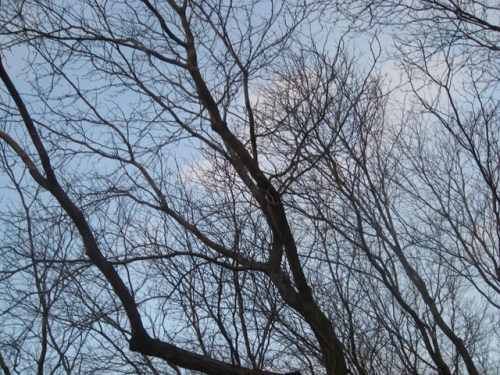
[Photo Credit: Self; Location: State College, PA ~ Fall of 2017]
clouds tear up sighing
children no longer playful
what did we create
© hülya n. yılmaz, 10.13.2018
[Photo Credit: Self; Location: State College, PA ~ Fall of 2017]
clouds tear up sighing
children no longer playful
what did we create
© hülya n. yılmaz, 10.13.2018
Filed under Reflections
“Indian people are still here,”
Otis Halfmoon of the Nez Percѐ tribe maintains
and adds: “We are not going away. It is time that
The newcomers to this country started paying
Proper respect to the elder status of the first nations.”
Chief Joseph: “Every animal knows more than you do. White men have too many chiefs. Learn how to talk, Then learn how to teach.”
a nation whose population
marked its intent to live in peace
yet was forced to dress in war-wear
for the U.S. government
began to shoo it away
way down below
onto reservations
in the words of the reservation doctor
he died of a broken heart
his countless appeals
to federal authorities
had after all
failed
“I am tired of fighting . . . from where
The sun now stands. I will fight no more”,
uttered by In-mut-too-yah-lat-lat,
“Thunder coming up over the land from the water”,
Or, “Chief Joseph” as he now is known to us,
the still proudly ignorant populace
that erodes more of his land
night by each dark night
day by each darker day
let us recall the times when we have died . . .
a death by a broken heart
© hülya n. yılmaz, March 18, 2018
[Published by Inner Child Press International in the April issue of the fifth volume of The Year of the Poet]
Filed under Poetry
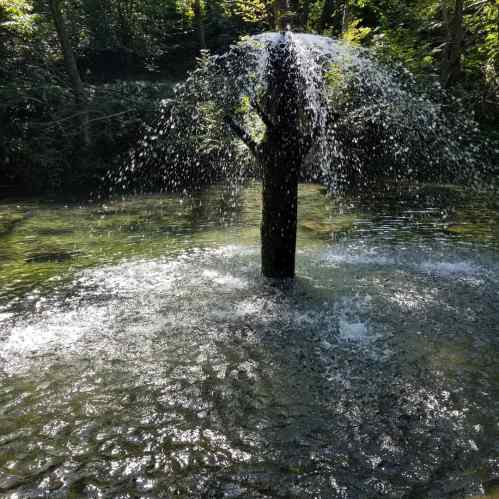
[Photo Credit: Self; Location: Peja, Kosovo ~ September 17, 2018]
our gracious host-poet
a war survivor of fame
still loving valiant
© hülya n. yılmaz, 10.13.2018
Filed under Reflections
the French
named them “Pierced Nose”
the ignorant
happened to find it befitting
such a limiting tag
the signaled practice however
is known not to have been wide-spread at all
othering the other “Self”
what’s new?
rivers have understood them
the lower Snake River
the Clearwater
the Salmon
as have streams and high plateaus
but also nature’s other gifts of abundance
berries roots a wide range of game
to which they would ask for forgiveness
for having had to kill for survival
while the French and non-French alike
continued their Nez Percѐ-butchery
among other acts of carnage
to pierce noses . . .
perhaps
horses were discovered in the 18th century
by this warlike-growing North American tribe
to its peoples alone does the gift of breeding belong
of the largest horse herds in the continent that is
including the distinctively colored Appaloosa
a most popular breed in today’s U.S.A.
looking at them with robotic eyes . . .
one should not neglect an add-on to this tale
what was (or may be still) their linguistic grouping?
we had better not forget our manners!
encyclopedias deliver detailed data on “Sahaptin”
even add this tongue is also called
Shahaptin and Sahaptian
imagine
if only we had this insight before
we would have . . .
© hülya n. yılmaz, March 15, 2018
[Published by Inner Child Press International in the April issue of the fifth volume of The Year of the Poet]
Filed under Poetry
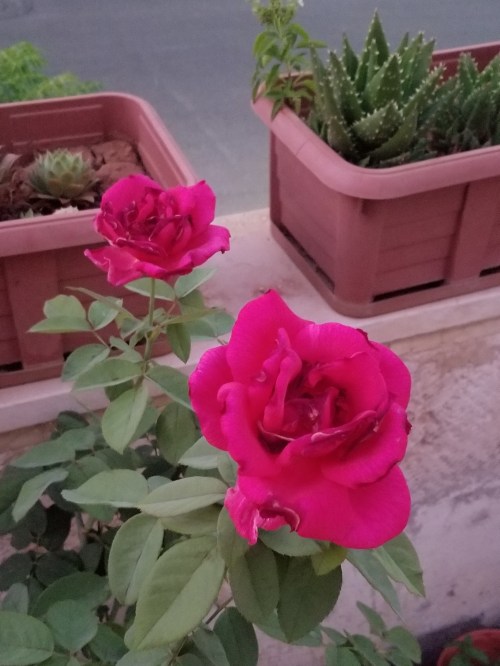
no need to be blood
true blood in soul through and through
unconditional
(c) hülya n. yılmaz, 10.13.2018
Filed under Reflections
what else is left to do
but to bow in highest respect
before the pens of a power
that overrules the brutality of the
segregationist
colonialist
chauvinist
ethnicist
sexist
racist
surpassing time and space
as only the unwavering ink can do
now is the only time
and here, the only place
where we must and shall
unconditionally embrace
for one loss from our unity in diversity
is a cause for an irreversible tragedy
that will appoint us with no delay
to the expiry of our humanity
© hülya n. yılmaz, February 18, 2018
[Published by Inner Child Press International in the March issue of the fifth volume of The Year of the Poet]
Filed under Poetry

the mountains’ beauty
an intoxicating bliss
some of us are not
© hülya n. yılmaz, 10.13.2018
Filed under Reflections
“Guyana Pastoral” kept calling me
from a place i dare not describe
i had no knowledge of the language
it was dubbed as Guyanese Creole
i still have no knowledge of the language
but assume to understand some words in it
it was the composer i just had to “get” anyway
and i believe i now have
Guyana’s Ambassador-at-Large
David Dabydeen
an explorer of the history of Guyana,
UNESCO’s Executive Board member
presenter of “The Forgotten Colony”
a mere sand particle at the sea colonies . . .
the owner of the incredible response
to J.M.W. Turner’s “Slave Ship”-painting
Turner’s depiction of African slaves in chains
being thrown overboard . . .
Dabydeen’s contemplation
on the ‘submerged body of a drowned slave
in the foreground’ of the piece,
his fantasy- and history-melding
upon the slave’s portrayal
his compelling act of reclaiming
and redeeming of the past
amid the shadows of his insights into
and studies of “the horrors of slavery and
colonization”, under the ever-so-thickening
clouds that carry on the darkest fame of
European barbarians, among which he ‘stages’
the migrant predicament
stating it as it is in an interview:
I’m inclined to think that Britain has
heavily depended on us for its material
and cultural development. The tribe had
an important say and influence in the
[British]development. You can’t be
a Guyanese without being a Brit and
you can’t be a Brit without being a
Guyanese, or a Caribbean.
recognition came along, it indeed came along
for Dabydeen would not leave any of it alone
along his steadfast extraordinary way
he helped the British develop some more
for he wanted the cast over the bloodied pools
under the blood-soaked beds no more
he helped the world develop some more
so, he co-edited a monumental how-to-book
for the walking dead of colonialist barbarisms-at-large
the Oxford Companion to
Black British History
which went down to history
as “a magisterial excavation of Black Britain”
one award after another accompanied Dabydeen
not merely for his editing work but rather as
a poet –the winner of the Commonwealth Poetry Prize
a masterful novelist
a model scholar
a literary-icon-educator
the Director of the Centre for Caribbean Studies
and Professor at the Centre
for British Comparative Cultural Studies
at the University of Warwick
and much more . . .
a coincidence?
I think not!
my discovery
of the Highly Esteemed David Dabydeen
was meant to be
for it has materialized
at a time of an utterly-trying
professional hardship of mine
not to exclude all those contemplations
on the value of poetry to me
a life-ring in a turbulent sea
with a nearby-view of the long-lost years
to no longer be
David rescued me
a professor passionate in teaching
a heavily-faded scholar of some merit
however depressed or self-oppressed
a struggling writer of fiction
a poet starving for self-attention
with much to tell and speak of yet
including the ‘migrant condition’
though not of Black History alone
nor purely of David’s “Slave Song”
besides
i wouldn’t know where to begin
and doing disservice to any gems
is not cannot will not be mine to claim
so,
it is my own path that i will follow
believe me there is significant sorrow
in that which i am able to pierce
through at least one lightless shadow
so,
i shall proceed
whenever wherever the ground is opportune
of course, always all ways
with fiery thanks from the soul
to that magical tongue
called the Guyanese Creole
© hülya n. yılmaz, February 18, 2018
[Published by Inner Child Press International in the March issue of the fifth volume of The Year of the Poet]
Filed under Poetry

[Photo Credit: Self; Location: Skopje, Macedonia ~ Summer, 2018]
feelings of much guilt
too many suffer horrors
yet nature numbs me
© hülya n. yılmaz, 10.13.2018
Filed under Reflections
what’s in a few dry leaves?
a mere excuse for me to contemplate
my travels in less fortunate lands
in one of them, called Palestine,
i had seen frivolous mercilessness,
that which stems from us,
the supposedly humane human species
for whose hate-filled greed
the innocent was being crushed
under the fancy tools of modernity
eagerly crafted by none other
than our so-called humanity
(c) hülya n. yılmaz, 10.1.2018
Filed under Poetry, Reflections

