According to the estimation by the United States Census Bureau, the world population today numbers 7.084 billion.
Hence, the odds for anyone to regain their selves’ other.
Only to have to let it go.
Having tasted the ultimate union, the emptiness inside compounds infinitely.
For, in its eternal presence this fire overpowers water.
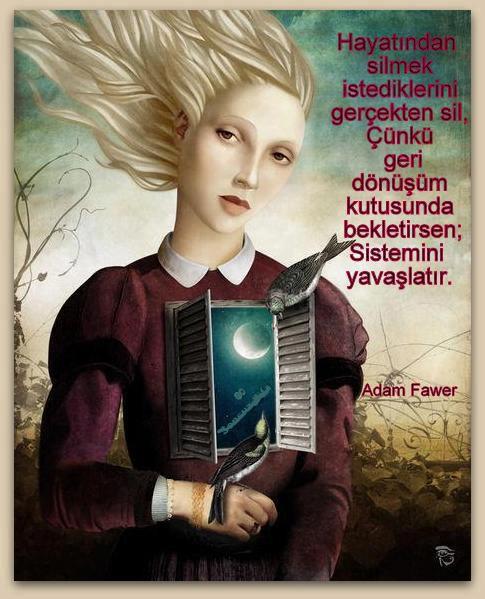
Translation of the Turkish text inside the image on the top, right (A search for the quote in English turned in vain):
“You must blank out for certain from your life those whom you need to forget. For, if you do keep them in the box of ‘return’, doing thus will halt you at your core being.”
Last Sunday, my reflections were all about thanking you, dear reader. As on any day of your visit, also today I have my thanks for you but also some thoughts on the relationship between love and death. Love – the essence of life. In the loss of which immeasurable pain rules, seizing the soul in its gradual death. At times, taking along also the remainder of the person, as my contemplations on three famous examples will show. All women. The biographical details on each are widely known. Therefore, I won’t bore you with a repetition.
“Modigliani”, the film begins with Jeanne Hebuterne before her jump to her death, asking, if we ever lived love, “real love” to the extent that we would “condemn” ourselves to “eternity in hell”. As she has:
In the film, “Sylvia” the poetess suffers immense pain grieving the loss of her husband to an affair:
Her repeated utterances, “I’m going to die, I’m going to die” foretell her dying into love before her suicide takes place:
In the same titled film, Camille Claudel’s destruction following the end of her affair with Rodin, for whom she is claimed by respected biographers to have been the muse, is very difficult to watch, for she is in infinite despair:
She doesn’t commit suicide. But also her life ends as she, too, dies into love.
Death. A topic requiring an open-ended discussion of phenomenal context. An attempt I won’t even pretend to be able to make. My only intent is to offer a definition of it through research compiled in theStanford Encyclopedia of Philosophy: “[T]he irreversible cessation of organismic functioning and human death as the irreversible loss of personhood.”
An all-consuming love is what the three women of my focus had lived. How their “organismic functioning” and “personhood” had terminated in ‘irreversible’ manner, does not matter. What the loss of their love consumed off of them, does. I know for I have been there. Not once, not twice but three times already. After the loss of my first love. Following my mother’s death – by its encyclopedic definition. When I lost my late love.
As for my love for my daughter, my only child, my fear over my own death compares nothing to the anguish I feel and have felt since her birth for any hurt she may have to suffer. But, this issue deserves an entire reflection column all by itself. And I better get you to my conclusion for today. Namely, the following statements of fame attesting to the fact that there, indeed, is death for some of us before death – into love, of the heart/inside, of hope, of inspiration, of awareness:
“It is love, not reason, that is stronger than death.” – Thomas Mann
“The heart dies a slow death, shedding each hope like leaves until one day there are none. No hopes. Nothing remains.” – Arthur Golden
“The tragedy of life is in what dies inside a man while he lives – the death of genuine feeling, the death of inspired response, the awareness that makes it possible to feel the pain or the glory of other men in yourself.” – Norman Cousins
“What is called a reason for living is also an excellent reason for dying.” – Albert Camus
“Many people die at twenty five and aren’t buried until they are seventy five.” – Benjamin Franklin
I am ‘tasting life twice in the moment and in retrospect’ only because you, dear reader, lend your interest to me. What a gift it is you are giving me through your reading! It is with much gratitude that I greet you today, or on any day you may look at, review, like, comment on, critique, or dislike any of my writings. Thank you for making me feel like my posts matter.
I look very much forward to finding you here latest this Sunday for my weekly reflections. In the meantime, may you have everything of delight in your life.
Disclaimer: I mean no offense to Native American Art or the symbolism that may be hidden in the image of my adoption here. Please do note the multiple opened hands behind the figure in the front – as if they are lending a support forward. What this art means to me is symbolic of how I feel about my readers: Supporting me in what I do in terms of my writing attempts. No other comparison whatsoever is intended.
Für meine liebe Lilia Felice Siede, die ich dank meiner liebsten Yasemin Ergün als Neugeborenes in meinen Armen als die “hülya Teyze” halten durfte: Meine herzlichsten Wünsche zum Geburtstag! For my dear Lilia Felice Siede, whom I was allowed to hold in my arms as a newborn as her “Auntie hülya” thanks to my dearest Yasemin Ergün: My most heartfelt wishes for your birthday!
I have written this poem also to honor the memory of my long-deceased cousin, Yasemin Ergün from her heart who was robbed by a fatal cancer of any opportunity beyond a mere one year to celebrate her daughter’s much sought birth.
To all cancer survivors: May you live long, healthy lives with your loved ones!
Lilia, *mein Schatz
you won’t know me
I left too soon
you were born of love and longing so strong
made me feel immortal by your side
merely a year, though, is all we had aside
you are a young woman now,
beautiful, bright and loved very much
no longer the tiny darling in my arms
precious but ever so fragile,
sending me beams for immense joy
shaming even the cancer of its call
it is your birthday today
I am not there for you again
but don’t be sad as you are not on your own
also the one with whom you locked eyes long ago
in my in-laws’ house, on the ground story
when we were cradling you, a newly born beauty
the one who probably mirrored me to you
for the color of her skin, hair and eye
whose both arms better secured you many a meal
before you glided into a sleep so deep and real
embraces you always with my and her love combined
whom I introduced to you in her mother’s tongue
you know, mein Schatz, you have met her online anew
the one who signs her e-mails hülya *Teyze for me and you
~ ~ ~ ~ ~ ~ ~ ~ ~ ~ ~
* (German): my treasure; my darling; my sweetheart
My gratitude comes to you, dear intuitive, creative, poetry-supporting and hard-working Michelle Vinci! For conceiving the brilliant idea behind your remarkable project, The Global Twitter Community Poetry Project and for having posted my poems today. You have my appreciation, in particular, for being ever so inclusive and accepting when it comes to submissions. It felt very good to me to see my poetry attempts taking shape on your project’s site. But it was quite a different, i.e. stronger pleasure, to read the passion-displaying work of others, something I very much look forward to keep doing.
The question “why” has been on my mind since I heard the news about yet another destruction of humans by humans. There are many unknowns yet. Regardless, the murder act says it all to me: Indifference to human life and its beauties. This time, my intentional shutting down the stream of tragic details and images didn’t help me. Besides, the delivery of information seems to feed out of repetition to the point as if numbing the reader through the acute phase of the event is the aim. So, I resort to creative writing, to poetry, to be specific. For I hold a strong belief in one claim of Charles Bukowski: “Poetry is what happens when nothing else can.”
I am participating in theNational Poetry Writing Month challenge this year. Writing one poem for each April day is the objective. The site provides optional prompts. Sometimes, I opt for one of them. On other days, I follow my own prompt from wherever that may appear. Yesterday, my poem, Day 20 assumed a critical tone on self-pity – under the influence of the recent human-to-human monstrosity. Then, also yesterday I followed my curiosity regarding a video on the latest event coverage (I must have really slipped as far as my usual rigid rule of “no-news until you have people around you”). I instinctively retitled that short program to read “indifference didn’t win” (instead of “evil”) – to stay true to my answer to “Why?” but also to my religion-neutral life view. Today, I am grateful to my curious act, as it led me to where I had so much hoped to go: Human-to-human love. The reporting by Byron Pitts seemed genuine, heart-felt, compassionate, refreshing to the extent that I am sharing it with you, Boston Marathon Bombing: Evil Didn’t Win.
It is my conviction that human-to-human destruction happens on account of indifference to human life and its beauty. And that ferocious approach to humanity at large breeds inside age-long thought processing systems where the individual is being indoctrinated toward or against one another.
Why?
For, not all of us heed the teachings of the authentic heart, the easiest lessons to embrace.
“This is my simple religion. There is no need for temples; no need for complicated philosophy. Our own brain, our own heart is our temple; the philosophy is kindness.” –Dalai Lama
 According to the estimation by the United States Census Bureau, the world population today numbers 7.084 billion.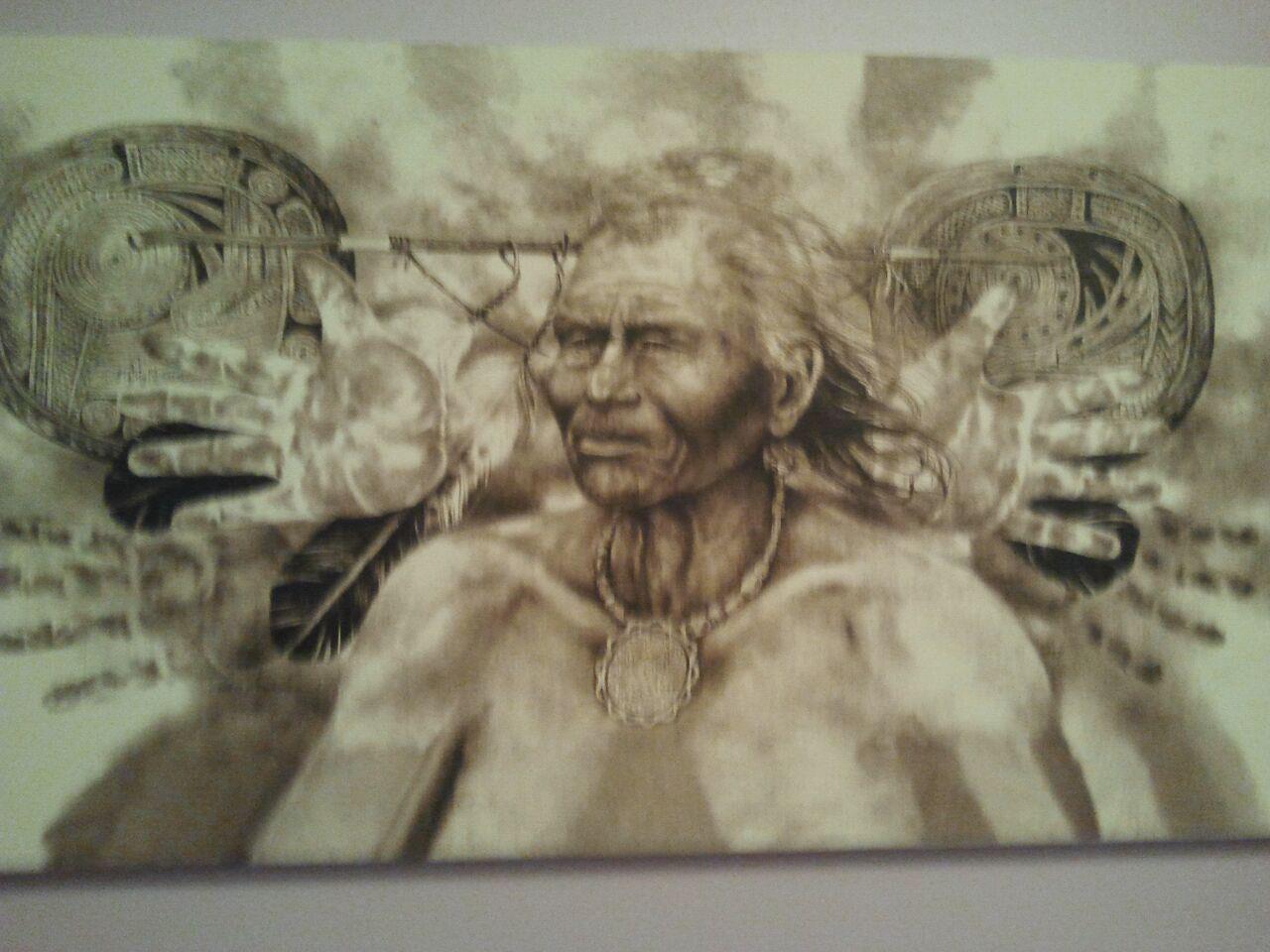

 hülyaswritings