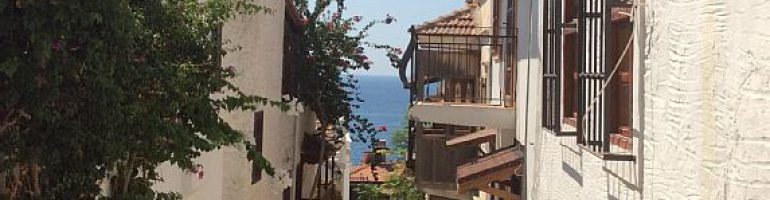
For the month of November, I have been posting also mid-week under the rubric “Autumn Wednesdays.” Well, as we all know, we entered December. Instead of leaving this Wednesday’s (perhaps) expected spot on my blog empty, I wanted to cross over this fairy-tale-like bridge with you to December (no worries: snow of this amount is yet to come to my neighborhood…). I wish you the best in every aspect of your lives and look forward to greeting you once again with my Sunday reflections.
Stay warm/cold depending on where you are but remain in good health and in high spirits!
“Good morning, Mrs. Güven.” Huban’s mother always received a friendly welcome from the nurses. Her now well-known routine was to arrive at the hospital before the doctors began their morning rounds. “She should be about to wake up now,” the youngest added in a low voice. They all watched her go in to her daughter’s room in quiet steps and close the door behind her in the same careful way.
Huban wasn’t in her bed. Her mother knocked on the bathroom door: “Good morning, baby! Do you need anything in there?” The lack of any sound made her panic. She tried the door. It was locked. She ran out to the hallway, asking for help. A male nurse shouldered the door. Huban was lying on the edge of the shower. Her blood covered her wrists, her robe, the floor and the hand basin. Her useless hands were still wrapped in gauze. On the left side of her head, lain a shiny piece. Her mouth was filled with blood, pieces of her lips dangled away from it…
17
“I loved her so. God, I loved her so! As if she were my own.”
“My dear Mrs. Güven, believe me I know,” Aker spoke in despair. His feelings of guilt were suffocating him. Yet, he was grateful she broke the adoption agency’s code for secrecy. He wrapped his arms around her. They stayed in tight embrace for a long time. He then helped her outside, inch by inch, afraid she might fall, losing her balance from the heavy sedatives. He had just seated her in his car, when she turned to Aker – her face distorted by sorrow, and asked:
“Can we say her night nurse goodbye? She treated Huban and me with such caring respect all this time. I never learned her name. I don’t think my Huban did, either.”
Aker’s heart ached beyond consoling. ‘She requested a transfer,’ he had overheard the head nurse tell the others that morning, while waiting for everyone to clear Huban’s room.
“I’m sorry, Mrs. Güven but she no longer works here,” Aker replied, sad to disappoint her. Much sadder to have lost Melek by a few hours…Yet, comforted to know she was saved from finding out her Melis’ tragic fate.
18
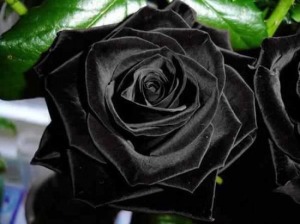
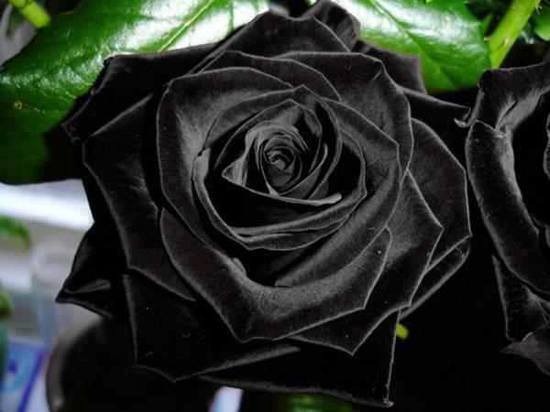
Back in the hospital, an attendant was called in to get Huban’s room ready for a new patient. His first stop, per strict instructions, was the bathroom. When he left it, the space was showing no trace of the horrifying scene many witnessed earlier that morning. That the bed was made took him by surprise. The head nurse had told him it was untouched – exactly how Huban had gotten out of it. He reached over and pulled open the covers to start with the fresh linens. He let out a big moan, thinking what he saw on Huban’s pillow to be a violin spider. Jumping back, his elbows hit the side bars. When that jolt didn’t make the thing move, he felt safe to take a closer look at it. His teen eyes were witnessing the most beautiful sight he had ever caught: a black rose.
[Photo image adopted from the Related Article as shown below]
For my last “Autumn Wednesdays” post, my memory took me to my early years of schooling when classes on Ottoman Literature were a requirement. Not much different than the (especially, 18th and 19th century) European literary traditions, female poets and writers of earlier centuries commonly used a pen name also on the Euro-Asian continent we know today as Turkey. Zübeyde(no known last name) of the 18th Ottoman century was no exception. In the 19th century, a time period that witnessed translations of some of her poems in to Western languages, in literary circles she was considered one of the “female Sultans of the land of the poems.” (Also see in “Zaman”)
In her research article, “Kadın Şairlerimizden Zübeyde Fitnat Hanım” Meryem Zarifoğlu lends to her readers first in Ottoman and modern Turkish (subsequently) what she claims to be a very famous song among Fitnat Hanım’s poems:
Güller kızarır şerm ile ol gonca gülünce
Sünbül ham olur reşk ile kâkül bükülünce
Anka dahi olursa düşer pençe-i aşka
Sayd-ı dile sehbâz-ı nigâhın süzülünce
Ol gonca-i nâ-şükûfte olur gül gibi handân
Şebnem gibi eşk-i dil-i şeydâ dökülünce
Her târı birer mâr oluyor gene-i hüsnünde
Ruhsârına zülf-i siyehin şâne bulunca
Can virmek ise kasdın eğer aşk ile Fıtnat
Hâk-ı der-i dildârdan ayrılma ölünce
***
Güller utanıp kızarır, o gonca gibi güzel gülünce.
Sünbül kıskançlıktan eğilir o saç bükülünce.
Ankâ bile olsa askın pençesine düşer.
Bakışın doğanı gönlü avlamak için süzülünce.
O açılmamış gonca gül gibi güler açılır;
Çılgın gönlün gözyaşı, çiy gibi dökülünce.
Her bir teli yılan gibi oluyor güzellik hazinenin,
Siyah saçın, taranmaya başlayıp yanağına dokununca.
Ey Fıtnat, amacın aşk ile can vermekse,
Sevgilinin kapısı önündeki topraktan ayrılma ölünce.
In my own English translation from modern Turkish, the poem-song appears as follows:
Roses become bashful and blush, when that bud-like beauty smiles.
Out of envy, the hyacinth sags, when that tress curls.
Even if it were the phoenix, it will succumb to the talons of love.
When the hawk of that gaze glides to hunt the heart.
It will smile and blossom like the unopened rose bud;
When the tear of the mad heart pours like the dew.
Each strand of your beauty trove, your black hair, resembles a serpent,
When it touches your cheek while being combed.
Oh, Fitnat, if your intent is to lose your life with love,
Don’t leave the soil before your beloved’s door when you die.
“Demir, I found her! I’ve been looking for her in all the wrong places all these years. She is back in Halfeti, working as a –”
“As a what? Where?” Demir asked with obvious impatience. Aker stopped himself from saying anything further.
“Well, my dear Dr. Polat,” he continued with a fake yawn, “I’ll call you first thing in the morning. When we are both wide awake. I’ve been driving all day long, and you certainly sound like you’d need a good night’s sleep also.”
Feeling as excited as a child on Sugar Fest, Aker couldn’t fall asleep. His imagination took him on a joyous ride, where Melek and Demir joined hands. Their Melis next to them – no longer a secret to her father.
14
Huban took her medications from where she had hid them. In fierce pain, she got up. Almost stumbling over her feet with each of her steps, she walked to the bathroom. She threw all pills in the toilet and flushed. For a while, she followed the twirling water – her head feeling its heaviest. She turned around. Her face was glancing at her. She hadn’t noticed before. A small, square mirror hung above the wash basin.
15
Remember the day, Butrus, when we met at our new retreat, ‘Yeni Halfeti Café’? How I nagged the owner for keeping our town’s old name? I still think ‘Karaotlak’ fits it better. The home of black roses should strut ‘black’ in its name. Do you remember, how, after my lecture-filled fit, you distracted me in your usual sweet manner? Teaching me our song, my very first English song? The only one I could ever memorize…
When you’re down and out
When you’re on the street
When evening falls so hard, I will comfort you
I’ll take your part
Oh, when darkness comes
And pain is all around
Like a bridge over troubled water
I will lay me down
Chapters 16-18/The End, forthcoming on next Sunday…
Have you ever had any moments when you wished to have met an individual no longer alive? This desire seems to be visiting me often, and in particular, when poets, writers, and thinkers are concerned. It happened again when I watched the following recording from the post-60s Turkish television archives:
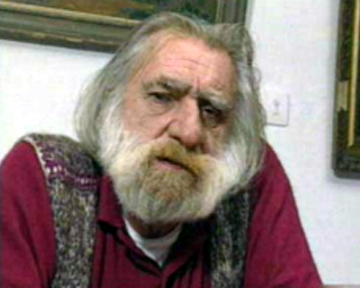
By giving me a sweet surprise from his grave – his laid back wittiness, Cemal Süreya immediately appealed to me as my focus for this November Wednesday. While live on television to talk on the state of literature in the country, the program host asks the poet the issue with the infamous misspelling of his last name. (When spelled with double “y”, it mostly identifies a woman in Turkish.) Süreya replies in polite indifference: “I lost a bet. About twenty years ago. Since I had two of them, I didn’t mind giving away one of the ‘ys’.”
I also wanted you to have a taste of one of Süreya’s perhaps most frequently cited poems, “Aşk” (Love) in its original language. For that, I am resorting to yet another video recording, in which Bülent Yakut delivers an utterly successful reading:
As for the poem I have selected to translate for you from many of Cemal Süreya’s lyrical collections, it highlights a rare find as far as the subject matter. The original version in Turkish appears first, as it has been my practice all this month:
“Melek, my sweetheart, we are almost there. I’m so sorry you are hurting so much. But Aker will take excellent care of you. We can’t possibly find more capable hands in hiding. And I’ll be by your side the whole time.”
Melek kept begging Demir to let her die. When they reached Aker’s clinic, a makeshift operating table was ready. Immediately, Melek was put under. A week later, hoping her brothers were no longer a threat, both men took her to a hospital. She was made into a star of a horror show: her charred scalp, the knife wounds on her stomach, chest and throat left her disfigured to eternity. It was for her a cruel irony that her face was left untouched.
“Demir, help me die. Aker can find something. I beg of you. Look at me! I’m a freak.”
Aker knew about the women’s safe house in Erzurum – the nearest one to their town. Demir was convinced, if Melek could see how others lived on despite their horrendous traumas, she would want to continue to live.
“Sweetheart, we are taking you to a women’s shelter. You will be safe there, and they will take good care of you until you gain back some of your strength. Everyone in the center knows Aker is your doctor, so, they will allow him to visit you. I, however, have to leave for a while. If I stay, I’ll put you in greater danger. In case your brothers find out…”
11
“Aker, they are beautiful. But you don’t have to bring me flowers. At least not every time. You have done so much for both of us already.”
Melek’s baby had captured Aker’s heart, as soon as she found out her pregnancy. She made him promise not to tell Demir in any of his letters. Neither had she ever asked him for an address. He was safe whereever he was. Only that mattered.
“Well, Melek, I got you special flowers today because you two will finally be moving out of here! You know my flat – I’m going to settle you two darlings there.”
Melek’s unease showed on her face. A sign of relief flushed over it, however, when Aker added: “There is too much work for me at the clinic these days. Patients around the clock. I set up a hide-a-bed in my office to catch some z’s whenever possible. That’ll be home for a while.”
Aker soon turned his apartment to a lovely nest for the mother and daughter. And boxes full of necessities were never rare. Just like that sunny afternoon. This time, though, he had also brought her a letter-size envelope. Unopened. No address. Only Melek’s name in the front. Melek recognized the unique slanting of Demir’s e’s and his distinctive k’s.
“Melek,” Aker whispered, “I kept my promise. I didn’t tell him.” Then, he left her to her letter.
“My sweetheart, when you read these lines, I will be far away. Your brothers found me. I convinced them not to hunt for you anymore. For that I gave them a self-murder of a promise. To leave the country, never to return. Our dear Aker will take –“
My Demir. Gone. For good –
Her tears falling down to her chin, she covered Melis’ face with kisses.
“My poor girl, you are never going to know your father. An exceptional man.”
Melis fell deep asleep in her arms. Melek put her on her bassinet in their joint bedroom at the end of the short hallway. Leaving the door ajar, she returned to the living room. She then dove in to a violent crying spell. Every moment of that horrible day became alive.
The joyous shouts of ‘time for honor cleansing’; the slashing of her stomach and her chest by her brothers holding large knives; the oldest one, giving her throat a sideway gash – none of the cuts too deep, to leave her alive to live the shame; the shaving of her envy-prompting hair; the meticulous steps her brothers took to cover her face; the unbearable pain on her scalp …
12
Melek folded the prayer rug, put it over the deskchair in her flat’s only real room. Her evening namaz never interfered with her arrival time at the hospital. Still, she hurried in dressing herself. Her uniform was a blessing. It compensated the time it took to fix her head. First came the white poplin, to which she had sewed a thick, elastic band all around. The bun almost shaped itself after the countless practices in the past. It covered her nape area in full. The nurse’s cap was last – to keep it all in place to help her avoid pitying eyes. Caressing the picture tucked in the outlet of the entry door’s speaker had been for years her last ritual before leaving home.
“Wherever you are, my baby, I hope you’re healthy and happy.”
Almost out the door, she took the faded photograph she stroked every day for twenty years, and soaked it with her kisses.
“I had no other choice, my girl. And Aker said they seemed like a nice family.”
Continuing on my nostalgic November trip to the writers’ and artists’ circles in Turkey, I want to introduce you to Can Yücel, a poet to whom many biographers refer as “Can Baba” – Father Can (non-religious connotation). His poetry stands out with his use of colloquial Turkish, thus, making poetic compositions a product for the masses. The video below demonstrates a flawless reading performance of one of Can Baba’s most popular poems – “The Most Beautiful Part about Being with You”:
For my translation, I have chosen a different poem by Can Baba, namely his “Hayal Oyunu” – “A Play with Imagination”:
Hayal Oyunu
Ellerindi ellerimden tutan
Ellerimdi ellerinden tutan…
Bıraktığı anda ellerimiz ellerimizi
Gökyüzüne vuracaktı gölgeleri ellerimizin
Kimbilir kaç martılar halinde
Bir masada karşı karşıya
Seyrederken dudaklarını senin
Dile gelmiş ilk Türkçeydik
Henüz başlamış kül rengi bahar
Ne savaş, ne barıştık biz…
Bu dünyaya yeni gelmiş bir diyar
Manolyaya gece konmuş kumrular…
A Play with Imagination
It was your hands holding mine
Mine, holding yours…
The shadows of our hands were going to hit the sky
As soon as our hands left our hands
Who knows? In the form of how many sea gulls
//
We were the first spoken Turkish
While I was beholding your lips
At a table, across from one another
We were the newly setting smoke-colored spring
We were neither war nor peace…
//
A realm newly born in to this world
Doves, perched on the magnolia in the night…
~ ~ ~ ~ ~ ~ ~ ~ ~ ~ ~ ~ ~ ~ ~
I hope you have enjoyed your visit this Wednesday. I look forward to you stopping by next week again but also for your visit to my Sunday Reflections.
Her brother – together with all their male cousins, had cornered them just when they were leaving the language school that Wednesday. Blending in with friendly gestures, they led them away from the exiting crowd. On the curbside of the opposite street, a large van with a company logo awaited.
Their ride ended in an abandoned farmhouse at the town’s outskirts. Butrus kept repeating: “Don’t hurt her! Take it up with me! Come on!” Huban’s brother jumped out, signaled all men but one to get out. One lifted Huban from her seat, dropped her to the ground and locked the doors behind them.
“Let the cleansing begin,” her brother announced. He helped Huban up but handed her over to the circle of men. His shriek increased in hatred: “Let’s take care of this dirt!” In utter panic, Huban saw how he resembled the rabid dog that was about to attack her when she was little. A neighbor had gunned it down before he could get closer to her. Her eyes wandered to the van – its tainted windows, void of giving her any hope. Before she turned her head back, she felt fierce pain on her lower stomach. Her chest felt cut open. Her throat was next. Knives were zigzagging on her body. In an involuntary attempt to block the sharp metals, her hands grabbed each one of them. She came close to passing out. How she wished for it. Still, she just wouldn’t lose consciousness. With a sudden leap, then, the tallest cousin took her head in a tight grip.
“You shamed us. You shall now be shamed.” Her brother’s voice was right behind her. Huban felt the razor blade moving up and down the back of her head – but not cutting open her skin. Then he stopped. She sighed with relief. “Look,” he yelled, “look at your honor now!” In the mirror his hair-covered hand shoved up to her face, Huban saw her reflection. Her strands of a color of rare beauty were gone.
“Are you sure you got the fire-safe one?” At the moment Huban heard her brother – still behind her, another cousin appeared before her, covered her face with a fabric – taping it along her hairline. A few seconds after she felt the burn on her bare scalp, Huban fainted.
8
“I’m so sorry baby, I’m so very sorry. Please, forgive me. Please!”
Mom? Why do you keep apologizing?
“Forgive me, my girl, please forgive me,” Huban’s mother kept begging, “I had no idea. I so wish I knew. Maybe I could have done something to stop them.”
She was a tall woman in her early sixties. A few graying hair escaped her headscarf. Her bulky, long-sleeved, ankle-length coat added to her heaviness. She bent over the bed’s locked sidebars and kissed Huban on her cheek – careful to avoid the full-head gauze. Then she repeated her frantic apology:
“I’m truly sorry, my baby, so sorry, so very sorry. For that young man, too.”
“Which young man? Why sorry?”
Huban’s frail voice was soaked in anxiety.
“Mom, tell me, who are you talking about?”
Staying close to Huban, she spoke – her voice, barely audible. Each one of her words, however, reached all cells in Huban’s body with loudest precision.
And, a gut-wrenching wailing rose out of her.
9
Three more minutes. She’ll be here.
A large clock hung on the wall across the bed. All others were bare. There was no window. A plastic water pitcher and a paper cup with a straw occupied the small, high night table.
Her name?
Melek was a petite, fine-boned, olive-skinned woman – always under her cap. White poplin with a thick, stitched-in elastic band extended from it in a bun and sat on her nape. Her almond-shaped dark green eyes had an intense glow.
“Good evening, Ms. Güven. How are you tonight?”
She entered Huban’s room at the same time with the same greeting as on any other evening.
What color is her hair? Is it long? Wavy? Thick?
Melek hoped her quiet patient with pained eyes would ask her for something at last – perhaps to help her take a shower. During every one of her night rounds, she felt the urge to devote all her time in this room. Just like with those others. Her checklist, however, always reached the end fast. She also knew the immediate effect of the medications too well. Once again, she tiptoed out to her station.
In her few short years in this hospital, Melek had witnessed many such cases. But they had all moved on. She had. Not that she had any choice…
For the month of November – my most favorite autumn time, I will make a virtual visit with an artist or a writer (or both, as is the case today) of my country of birth. Why Turkey? Why now? Well, I have reached and fast passing the autumn of my life and have begun to feel an increasing nostalgia toward the world corner where I first joined the living. November is marked for us in the U.S. as the month of thanksgiving. It is my way of giving thanks to my birthing place in this manner. And I just would love it, if you were to join me on that travel for a little longer…on Wednesdays…and only for a month…
The video above vocalizes a reading of “Yalnızlık Paylaşılmaz,” one of the many poems on loneliness by Turkey’s widely reputed poet, Özdemir Asaf – Halit Özdemir Arun, with his real name (1923-1981):
Yalnızlık, yaşamda bir an,
Hep yeniden başlayan…
Dışından anlaşılmaz.
Ya da kocaman bir yalan,
Kovdukça kovalayan…
Paylaşılmaz.
Bir düşünde, beni sana ayıran
Yalnızlık paylaşılmaz
Paylaşılsa yanlızlık olmaz.
Loneliness, an instant in life,
Always occurring anew…
An enigma from the outside.
Or, a colossal deceit,
One that chases the more it is chased…
Cannot be shared.
Saving me for you in one of your dreams
Loneliness cannot be shared
If it could, it would not transpire.
(My own translation, as of 10.29.2013)
Özdemir Asaf – with his best-known name, is considered a prominent landmark when contemporary Turkish literature is considered, not only for his poetic work in his native tongue but also for his translations from French poets and writers in journals and anthologies since 1940.
Yıldız Moran Arun (1932-1995), the poet’s wife was Turkey’s first professionally trained female photographer. An article inKadınlar Gökkuşağı claims that – while on one single day, 25 of her photographs were purchased in Cambridge; Moran’s photographic art was overlooked in her country of birth, Turkey, despite its popular appeal. Her accounts on how she met her husband count as some of the most critical representations of Özdemir Asaf in his true light.
The poem below constitutes one of the poet’s perhaps most passionate verses on loneliness, with my English translation following immediately:
Sen herşeyi süpürebilirsin; sonbaharı süpüremezsin
yalnızsa sürekli bir sonbaharı süpürür hep..
Düşünemezsin.
Yanar sobasında yalnız’ın üşüyen bakışları.
Lambasında karınlığa dönük bir ışık titrer sönük-sönük.
Penceresi dışına kapanmıştır kapısı içine örtük.
Yalnız bin yıl yaşar kendini bir an’da.
Yalnız’ın nesi var nesi yoksa tümü birdenbire’dir.
Yalnız bir ordudur kendi çölünde..
Sonsuz savaşlarında hep yener kendi ordusunu.
Yalnız’ın sakladığı bir şey vardır;
Boyuna yerini değiştirir boyuna onu arar… Biri bulsa diye.
Yalnız hem bilgesi hem delisidir kendi dünyasının.
Ayrıca; hem efendisi hem kölesidir kendisinin.
Tadını çıkaramaz görece’siz dünyasında hiçbirisinin.
Yalnız sürekli dinleyendir söylenmemiş bir sözü.
Sözünde durması yalnız’ın yalancılığıdır kendisine..
Hep yüzüne vurur utancı. O yüzden gözlerini kaçırır gözlerinden.
Yalnız’ın odasında ikinci bir yalnızlıktır ayna.
Yalnız hep uyanır ikinci uykusuna.
Yalnız kendi ben’inin sen’idir.
Bir sözde saklanmış bir yalanı bir gözde okuduğundan
bakmaz kendi gözlerine bile.
Her susadığında o kendi çölündedir.
Kendi öyküsünü ne anlatabilen ne de dinleyebilen.
Kendi türküsünü ne yazabilen ne söyleyebilen.
Bir zamanlar güldüğünü anımsar da…
Yoğurur hüzün’ün çamurunu avuçlarında.
Yalnız aranan tek görgü tanığıdır
yargılanmasında kendi davasının..
Her duruşması ertelenir kavgasının.
Yalnız hem kaptanı hem de tek
yolcusudur batmakta olan gemisinin..
Onun için ne sonuncu ayrılabilir gemisinden ne de ilkin.
Yalnız’ın adı okunduğunda okulda ya da yaşamda..
Kimse “burda” deyemez.. Ama yok da..
Uykunun duvarında başladı..
Önceleri bir toz gölgesi sanki; sonra bir yumak yün gibi.
Ama şimdi iyice görüyor örümceğin ağını gün gibi.
Yalnız’ın adına hiç kimse konuşamaz..
O kendi kendisinin sanığıdır.
Yalnız önceden sezer sonra olacakları..
Paylaşacak biri vardır; anlatır anlatır ona olanları olmayacakları.
Her leke kendisiyle çıkar.
You can sweep everything; but not the autumn
lonely*, however, sweeps the fall all the time…
You cannot imagine.
The freezing looks of lonely, inside its burning stove.
A dim light shivers toward the darkness in its lamp.
Its window is shut to the outside; its door, closed to its inside.
In an instant, lonely lives itself a thousand years.
Whatever lonely owns, they all amount to all at once.
Lonely is an army in its own desert…
Always defeats its own army in eternal wars.
There is something lonely hides incessantly;
It changes its location, quests for it incessantly…For someone to find it.
Lonely is both the wise and the mad of its own world.
Moreover; the master and the slave of itself.
Can’t savour any of them in its futile world
Lonely constantly listens to an unspoken word.
Keeping its promise is its deception of itself…
Its disgrace always tells it off. It therefore avoids its eyes from its own.
In lonely’s room, the mirror is a second loneliness.
Lonely always wakes up to its second sleep.
Lonely is the you of its own I.
For it once read a lie in an eye hiding in a word
it won’t even look in to its own eyes.
When it thirsts, it is in its own desert.
Can neither tell its own story nor can it listen to it.
Can neither write its own song nor can it sing it.
Though it will remember its once upon a smile…
It will knead the sorrow’s mire in its palms.
Lonely is the only witness searched for
in the trial of its own case…
Each hearing of its quarrel, postponed.
Lonely is the captain as well the sole
passenger of its own sinking ship…
It thus can neither leave it last or first.
When its name is called in school or in life…
No one can say “here”…But neither “away”…
It began on the verge of sleep…
As if a dust shadow, first; then, a ball of yarn.
But now, it clearly sees the spider web as clearly as day.
Lonely is deaf to what it had heard; blind to what it had seen…
It dies and dies then kills…it kills and kills then dies.
Forgets what it hears; thinks of what it will hear.
No one can speak on lonely’s behalf…
It is its own accused.
Lonely foresees what is yet to happen…
It has someone to share it with; tells and tells all that happened all that won’t take place.
Every defect removes itself with itself.
(My translation as of 10.29.2013. *Özdemir Asaf transforms the adjective “lonely” in to a noun in Turkish. I have honored the grammatical freedom he takes in this poem.)
I hope you enjoyed this autumn Wednesday with me during my virtual visit to an artist and a writer of Turkey. I very much look forward to another November Wednesday but first, to Sunday when we will meet here again. May you have a wonderful of everything in the meantime.