Category Archives: Reflections

Özdemir Asaf and Yıldız Moran Arun

For the month of November – my most favorite autumn time, I will make a virtual visit with an artist or a writer (or both, as is the case today) of my country of birth.  Why Turkey?  Why now?  Well, I have reached and fast passing the autumn of my life and have begun to feel an increasing nostalgia toward the world corner where I first joined the living.  November is marked for us in the U.S. as the month of thanksgiving.  It is my way of giving thanks to my birthing place in this manner.  And I just would love it, if you were to join me on that travel for a little longer…on Wednesdays…and only for a month…


The video above vocalizes a reading of “Yalnızlık Paylaşılmaz,” one of the many poems on loneliness by Turkey’s widely reputed poet, Özdemir Asaf – Halit Özdemir Arun, with his real name (1923-1981):

Yalnızlık, yaşamda bir an,

Hep yeniden başlayan…

Dışından anlaşılmaz.


Ya da kocaman bir yalan,

Kovdukça kovalayan…

Paylaşılmaz.


Bir düşünde, beni sana ayıran

Yalnızlık paylaşılmaz

Paylaşılsa yanlızlık olmaz.

Loneliness, an instant in life,

Always occurring anew…

An enigma from the outside.


Or, a colossal deceit,

One that chases the more it is chased…

Cannot be shared.


Saving me for you in one of your dreams

Loneliness cannot be shared

If it could, it would not transpire.

(My own translation, as of 10.29.2013)

Özdemir Asaf – with his best-known name, is considered a prominent landmark when contemporary Turkish literature is considered, not only for his poetic work in his native tongue but also for his translations from French poets and writers in journals and anthologies since 1940.

Yıldız Moran Arun (1932-1995), the poet’s wife was Turkey’s first professionally trained female photographer.  An article in Kadınlar Gökkuşağı claims that – while on one single day, 25 of her photographs were purchased in Cambridge; Moran’s photographic art was overlooked in her country of birth, Turkey, despite its popular appeal.  Her accounts on how she met her husband count as some of the most critical representations of Özdemir Asaf in his true light.

The poem below constitutes one of the poet’s perhaps most passionate verses on loneliness, with my English translation following immediately:

Sen herşeyi süpürebilirsin; sonbaharı süpüremezsin
yalnızsa sürekli bir sonbaharı süpürür hep..

Düşünemezsin.

Yanar sobasında yalnız’ın üşüyen bakışları.
Lambasında karınlığa dönük bir ışık titrer sönük-sönük.
Penceresi dışına kapanmıştır kapısı içine örtük.

Yalnız bin yıl yaşar kendini bir an’da.

Yalnız’ın nesi var nesi yoksa tümü birdenbire’dir.

Yalnız bir ordudur kendi çölünde..
Sonsuz savaşlarında hep yener kendi ordusunu.

Yalnız’ın sakladığı bir şey vardır;
Boyuna yerini değiştirir boyuna onu arar… Biri bulsa diye.

Yalnız hem bilgesi hem delisidir kendi dünyasının.
Ayrıca; hem efendisi hem kölesidir kendisinin.
Tadını çıkaramaz görece’siz dünyasında hiçbirisinin.

Yalnız sürekli dinleyendir söylenmemiş bir sözü.

Sözünde durması yalnız’ın yalancılığıdır kendisine..
Hep yüzüne vurur utancı. O yüzden gözlerini kaçırır gözlerinden.

Yalnız’ın odasında ikinci bir yalnızlıktır ayna.

Yalnız hep uyanır ikinci uykusuna.

Yalnız kendi ben’inin sen’idir.

Bir sözde saklanmış bir yalanı bir gözde okuduğundan
bakmaz kendi gözlerine bile.

Her susadığında o kendi çölündedir.

Kendi öyküsünü ne anlatabilen ne de dinleyebilen.
Kendi türküsünü ne yazabilen ne söyleyebilen.

Bir zamanlar güldüğünü anımsar da…
Yoğurur hüzün’ün çamurunu avuçlarında.

Yalnız aranan tek görgü tanığıdır
yargılanmasında kendi davasının..
Her duruşması ertelenir kavgasının.

Yalnız hem kaptanı hem de tek
yolcusudur batmakta olan gemisinin..
Onun için ne sonuncu ayrılabilir gemisinden ne de ilkin.

Yalnız’ın adı okunduğunda okulda ya da yaşamda..
Kimse “burda” deyemez.. Ama yok da..

Uykunun duvarında başladı..
Önceleri bir toz gölgesi sanki; sonra bir yumak yün gibi.
Ama şimdi iyice görüyor örümceğin ağını gün gibi.

Yalnız duymuş olduğunun sağırı görmüş olduğunun körüdür..
Ölür ölür öldürür.. Öldürür öldürür ölür.
Duyduklarını unutur duyacaklarını düşünür.

Yalnız’ın adına hiç kimse konuşamaz..
O kendi kendisinin sanığıdır.

Yalnız önceden sezer sonra olacakları..
Paylaşacak biri vardır; anlatır anlatır ona olanları olmayacakları.

Her leke kendisiyle çıkar.

You can sweep everything; but not the autumn

lonely*, however, sweeps the fall all the time…

You cannot imagine.


The freezing looks of lonely, inside its burning stove.

A dim light shivers toward the darkness in its lamp.

Its window is shut to the outside; its door, closed to its inside.


In an instant, lonely lives itself a thousand years.

Whatever lonely owns, they all amount to all at once.

Lonely is an army in its own desert…

Always defeats its own army in eternal wars.

There is something lonely hides incessantly;

It changes its location, quests for it incessantly…For someone to find it.


Lonely is both the wise and the mad of its own world.

Moreover; the master and the slave of itself.

Can’t savour any of them in its futile world


Lonely constantly listens to an unspoken word.

Keeping its promise is its deception of itself…

Its disgrace always tells it off.  It therefore avoids its eyes from its own.


In lonely’s room, the mirror is a second loneliness.


Lonely always wakes up to its second sleep.

Lonely is the you of its own I.

For it once read a lie in an eye hiding in a word

it won’t even look in to its own eyes.

When it thirsts, it is in its own desert.

Can neither tell its own story nor can it listen to it.

Can neither write its own song nor can it sing it.


Though it will remember its once upon a smile…

It will knead the sorrow’s mire in its palms.

Lonely is the only witness searched for

in the trial of its own case…

Each hearing of its quarrel, postponed.


Lonely is the captain as well the sole

passenger of its own sinking ship…

It thus can neither leave it last or first.


When its name is called in school or in life…

No one can say “here”…But neither “away”…

It began on the verge of sleep…

As if a dust shadow, first; then, a ball of yarn.

But now, it clearly sees the spider web as clearly as day.

Lonely is deaf to what it had heard; blind to what it had seen…

It dies and dies then kills…it kills and kills then dies.

Forgets what it hears; thinks of what it will hear.

No one can speak on lonely’s behalf…

It is its own accused.


Lonely foresees what is yet to happen…

It has someone to share it with; tells and tells all that happened all that won’t take place.

Every defect removes itself with itself.

 (My translation as of 10.29.2013. *Özdemir Asaf transforms the adjective “lonely” in to a noun in Turkish.  I have honored the grammatical freedom he takes in this poem.)

~ ~ ~ ~ ~ ~ ~ ~ ~ ~ ~ ~ ~ ~ ~ ~ ~ ~ ~ ~ ~ ~ ~ ~ ~ ~ ~ ~

I hope you enjoyed this autumn Wednesday with me during my virtual visit to an artist and a writer of Turkey.  I very much look forward to another November Wednesday but first, to Sunday when we will meet here again.  May you have a wonderful of everything in the meantime.
Leave a comment

Filed under Reflections

“Black Rose”, a short story (9/6/2013) – chapter 4-6

Continued from last Sunday

999313_404309403011070_1994059744_n

4

“Can you believe, we have known each other four months already?”  Butrus spoke in full excitement but looked tired.

“Did you have enough sleep last night?”  Huban didn’t hide her concern.  His classes at the university ended at noon.  In the early afternoon, he studied for the next day.  Then came his language hours.  In the last two months, he had acquired two night jobs – one in the university library and one in the town’s largest bookstore.  However well paying they were, Huban worried for his health.

“Have you extended your work hours?”  Huban feared to hear a ‘yes’.

“No, my love, I don’t need to.  I already put aside a decent amount of money for us.  I know, my Spanish classes take a good part of it but that’s for our life in Zafra.”

“Zafra?  What’s going on, Butrus?  What IS Zafra?”

Butrus took an envelope from his coat’s inside pocket and pointed: 06300 Zafra – Badajoz, Spain.

“That I’m adopted, you know my love but there is more to it.”

“I wish I were adopted,” Huban’s voice reeked sadness.

“I know, love, but things will change very soon.  And remember: your parents didn’t die when you were two.  You made memories with them for twenty years.  I can’t remember anything about mine.”

Butrus then moved her bangs aside and kissed her forehead.  With tears of regret for reminding him of his huge loss in the October 1983 earthquake, Huban held on to his hand for a long time.   The nanny had stayed back with a sick Butrus, while his parents – as custom on religious holidays – had been visiting in-laws in Erzurum…

Butrus broke their melancholy: “Listen, my love, we are both going to be just fine.  I have very exciting news.”

“What is it?”

“You know my uncle gave me home.  ‘What IS Zafra?’ you asked.  Well, he lives there.  He brought me up here, in my birthplace though.  The town’s esteemed Dr. Polat.  He sacrificed his life for me.  He left for Zafra only after I was admitted to Harran University with scholarship.  Room and board included.”

Huban listened with intent.

“After all he has done for me,” Butrus’ voice echoed his emotions, “he now offers us the safety of his home.  Imagine, my love!  He writes we can live with him until we tire of him and he is ready and able to cover all our material needs.”

Sliding his hand in to the same pocket, Butrus brought out another envelope.  Inside were two plane tickets and a sizeable pack of Euro bills.

That Wednesday afternoon in the alley opposite the language school, Butrus pulled Huban close to his warmth.  He caressed her eyes with fire in his.  The darkness of their corner encouraged them to their first lip-kiss.

5

His nicotine-filled breath right at her face, Huban’s brother looked fierce.  He had gathered the family in the kitchen’s ell – their makeshift living room.  A friend – the new kitchen help had seen Huban and a young man in the university cafeteria together.  Stone-faced, their father got up from his chair.  His muscular body of overwhelming height stopped at a breath-length distance from Huban.  Scanning her from top to bottom, he spoke in threatening calm:

“He is not one of us.  Get it, or else!”

His lips coiled in to one, her brother then grabbed her shoulders and shook her with severe force.  He towered over her miniscule stature by at least two heads.  He was even more intimidating tonight.  At eye-level with Huban, he pierced her with his eyes.  His angry voice rose in a growl:

“You’d better be careful.  Or, you’ll answer to me!”

He threw their mother a quick, spiteful look and shouted:

“What did I tell you about mixed schools?”

His eyes almost white in rage, he turned to Huban again and yelled:

“There are two types of girls – those to marry and those to have fun with.  You know what type YOU have to be.  Don’t you ever forget it!  If dad weren’t the youngest…if it weren’t for his brother, our beloved doctor, you wouldn’t have seen any school, let alone be in college.  You’d better watch out and do as I say!  Or I’ll put him in his cage!”

Their mother was silent.

6

I’ll always be there for you, my love.  I’ll never let you down’.

Huban started to inch one arm under her covers.  Exhausted, she gave up the effort.  Ignoring the intense soreness on her chest, she tried to reach Butrus with her other arm.  That one landed on her throat.  She gave out a faint groan.

For weeks, she had been falling in and out of consciousness.  When she tried to come to, she didn’t understand first why her head gave her agonizing pain.  Or why she had violent cramps in her abdomen.  Her chest felt tender and heavy.  Her hands ached in throbs.  Then, she remembered…she and Butrus…

Chapters 7-9, forthcoming on next Sunday…

4 Comments

Filed under Reflections

“Black Rose”, a short story (9/6/2013) – chapter 1-3

On August 11 of this year, I had posted under “I wonder, if you…”, excerpts from my “Black Rose” – a short story I wrote as my final exam toward my FreeLance Writing diploma.  I now have earned that license and want to thank you once again for encouraging regarding my question back then whether you would be tempted to read more after those few sections.  To share a secret with you…I went beyond a mere submission of this work as my final project and dared to enter it for an essay contest…Starting today, I will be posting this tale of fiction in chapter installments through its end.  Other than my instructor’s remarks, I have no information as to how this story reads outside my own biased embrace of it, and would therefore greatly appreciate any thoughts on it you may want to share with me. 

For the record: There is nothing fictional about my story’s central theme – honor killings.  It is my hope that the links I provide below will make at least a dent in raising further awareness  with our continued help.  As for the title itself, it, too, is no product of my imagination.  Black rose is claimed to be unique to Halfeti, Turkey.

999313_404309403011070_1994059744_n

1

  “Oh, dear God.  My girl.  My poor girl.  Who did this to you?  What they did to you!  Oh, God.  No!  No!”

“Mom, help me…”

The ambulance sped through the many rural areas to Şanlıurfa hospital.  Where Huban was born.  The medics raced her stretcher through the emergency entrance, while a loud speaker summoned doctors to the OP.  Her mother’s bewildering plea was the only sound in the crowded lobby: “Please.  Please.  No window, no mirror.  I beg of you.  Please!

2

“Hello there, my love!”  Huban stirred.

Butrus?

A smile grew on her face.

“Hi there, love!”

“Butrus, you are here!  You are here!  But…oh no, wait, don’t look at me.  Please, don’t.  My hair -“

“My love, you’re beautiful,” he interrupted.

“Remember, whenever the sun shone on it, you’d –“

“say,” Butrus picked up from where Huban left, “your hair is too stunning.  Don’t you ever confine it in braids.  The light won’t know what to do, if it can’t fall on its waist-long drop. To show off its blackish maroon hue!”

“Okay, okay, you fixed my hair.  But…but, see what they put on me?”

“All I see is my elegant Huban on top of a radiator,” Butrus responded.

Harran University was brand new, and its library, still under construction.  A radiator below a dormer window had become Huban’s reading place between classes.  It stood at the end of a hallway that strayed from a high-traffic lecture hall passage.  A deep and wide marble slab atop the bars – a code for heating companies back then, diffused the burn for her just about enough.  Rapt in her book, Butrus’ sudden presence had caught her by surprise, especially the ease at which he engaged her in a conversation.

“Poor me, my seat choice never escaped your teasing.”

Butrus grinned and went on: “It was an October morning.  An unusual chill had set in.  Black was your color: a high-neck, long-sleeve sweater, bell-bottom pants, low heel boots and a long-strap handbag.  And then…there was your hair.  Down.  All the way down.”

My hair…

“You looked so good in black,” Butrus spoke in awe.  “The sun-shaped pendant on your necklace was the only different color on you.  Outside the honey-touched sparkles in your eyes, of course.  I had never seen such a shade of intense green before.“

How about you, my darling?  Huge hazel eyes.  Long thick eyelashes.  Eyelids adorably slanting with each attractive smile. 

“You were wearing clear, stylish glasses,” Huban uttered.

Those light brown waves of hair resting on your neck.

“You knew how to resist the college-male fad of well-below-the-shoulder-look.” 

Your tall, slender, shapely body in a casual outfit.  The faint laugh lines on the corners of your lower eyelids.  And those lips…curling upward with each laugh.  Leaving me with a sensation I hadn’t felt before.

3

Wednesday afternoons, Huban had a secret routine.  Skipping her last class, she left the campus for the language institute.  Butrus had started learning Spanish.  She secured a spot in the farthest corner of the alley across from the multiple-story building.  His classroom was on the second floor, with windows looking over the school’s spacious, circular landing.  He always came out first.  His rushed feet nearing him to her delighted Huban.  One arm tucked in the back, donning his landmark smile; he greeted her with the same ‘hello, my love, hello!’  Then unveiled her favorite flower: a rose.  One black rose.

Chapters 4-6, forthcoming on next Sunday…

~ ~ ~ ~ ~ ~ ~ ~ ~ ~ ~ ~ ~ ~

Black rose of Halfeti Turkey

More on the black rose of Halfeti, Turkey

Images of the black rose and Halfeti, Turkey

International Honour Based Violence Awareness Network

The AHA Foundation

PBS Speak Truth to Power

6 Comments

Filed under Reflections

“Eşkiya” and an afterthought


The scene shown above is claimed to be the most critical representation of the film “Eşkiya,” a groundbreaking contribution to contemporary Turkish cinema.The plot summaries in English of my finding don’t dwell on what this excerpt reveals with succinct emphasis; namely, the Leitmotif that holds this artistic production together: the story of Baran and Keje.  It is a tale of love extending beyond the scopes of life and death, resonating the legendary loves in Turkish literature.  Such as that between Ferhat and Şirin (12th century), Leyla and Mecnun (16th century), Kerem and Aslı (16th century), and others.

Keje buries herself in silence and inaction when the man who betrayed Baran to unjust imprisonment becomes her husband after he buys her from her father. Thirty-five years later, Baran is free again.  His untiring search for his love embodies his only livelihood.

The storyline assumes numerous complications through unrelated events to create in Baran once again an innocent bystander of crimes he did not commit.  Alongside, Baran confronts at last his worst enemy.  In Keje’s presence.  Her silence – her way of mourning for the loss of her love to life, will cease only then – she has Baran understand – if she were to witness a falling star.  A symbol to her of a tortured soul attaining ultimate freedom – for both lovers…

While I can’t remember how far back in the past, I know exactly how I used to think about the phenomenon of love and its loss: a distinctive flair of melancholy lurked only over the people of Turkey – as with today’s few quick examples.  But then, I discovered famous names of non-Turkish roots with the same approach to this utterly uplifting, at the same time soul shattering reality of life.  And here I am, sharing some of my related deliberations with you in the form of a poem I have written recently:

when love is everything

among long-time friends once again

enduring the familiar left-side pain

decades surpassed their centuries

the hurt remains the same

an Immortal Beloved crafted life

birthed death ever so keen

a blazing desire in-between

oh geh mit, geh mit

oh accompany me, accompany me

Hebuterne embraced the call

Plath followed it with ease

Claudel suffered a living disease

King Edward VIII stunned the monarchy

etched to memory for lives to come:

the essence negates all that is told

nourishes from the authentic self;

sates and attains for evermore,

absolute ecstasy at the core.

For love is everything.

hülya yılmaz (October 3, 2013)

Have you ever grieved in deep sorrow for losing love but led yourself to conclude you had no right to mourn in the open because your loss was not one to death?

Leave a comment

Filed under Reflections

A bright light

1045050_572968926087231_376921513_n

a loved one’s long lost scent

the surprise of an aromatic flow

a place i may never get to better know

houses my original self

having waited for me understood it somehow

though years of travel days of distances away

unchains with softest touch its trapping turmoils

spreads before it the most welcoming skies

breathes for it soothing breezes of air

oceanic waters of ebbs and tides

unpredictable yet donned in magnetizing beauty

traces the devotion of forgiving patient friends and family

i live

re-live

and live again

from readers writers thinkers alike

for long on a throne of their own right

i cite

re-cite

and cite again

for all constitute a rope from a well about to expire

the wish to die thus does not easily stay alive

the light’s name has always been Sinopem for me

my ashes await to be spread there to the sea

its incomparable warmth was all i could wish for or plea

in approach of the cold darkness of dark moments yet to see

i finally can take it to my heart as well my head

the many a things i must still do that lie ahead

for my love of family and friends, in no doubt

however also for others i care deeply about

a very young man from the fresh recent past

opened my eyes to a distinct value at last

has shaken my self to an unselfish role

lending it sense to his potentials galore

born with no privilege living that way, too

i, however, made and today make better due

yet most i sorrow over has been my own woe

this tale though is none about me or my ado

he lives too far away, i may never see him be

i would like to see his sweet smile right before me

what’s more vital, however, is for me here to tell

the life impeccable poetry shapes onto his cell

with each of his words’ ever growing legacy

how his wisdom pours out of his essence

after a mere twenty years of existence

lacking the luxury of a computer unlike you and i

his poetic charm stuns his own words of innate music

assembles them on broad canvas of a rare refined gift

destined to soar in peace over peaks ever so high

he has just birthed The Lightbearer, a collection of verses

dedicated ardent loving are this special soul’s admirers

my dire hope is you, too, will pause a moment to heed

to see for yourself what he offers to forever breed

Kolade is his name, Olanrewaju to add

Freedom is the epithet he was meant to have had

Sinopem remains a light to me still

it will continue to be to delightfully thrill

the radiance from Kolade Olanrewaju Freedom

emanates a glow though beyond unfamiliars afar

settles it gently in to this fast aged heart

determined a little while longer to trill

hülya n. yılmaz, 10.12.2013

~ ~ ~

Kolade Olanrewaju Freedom  has been invited by the National Library of the Philippines Historical Forum 2013 to receive an award for his positive contribution to humanity through poetry.  Unfortunately, due to lack of funds he won’t be able to attend the ceremony where he would have been recognized in person as one of the honored poets worldwide.

~ ~ ~

With permission from this young poet, please find below his life story in his own words:

“I was born on the 23rd of December, 1993 in Osun State, Nigeria.  I attended my primary school at Merry Kiddies Nursery and Primary School Lagos State, Nigeria where I graduated with an excellent result.  I moved on to secondary school otherwise known as high school at Federal Government College, Ikirun.  I was in the Science department, and I had my O’level result there.  After leaving high school, I realized Science was not my passion, I studied science due to my fascination for it and also to impress others.

In my quest to satisfy passion and refine my talent, I started tutoring myself as an art student.  I taught myself literature, government, c.r.s etc.  After this, I sat for another O’level exam conducted by W.A.EC G.C.E and to my amazement, I passed all my Art subjects exams.  It was during my personal study as an art student that I encountered the gift of writing poetry, and so far, I have contributed in International anthologies like United We Stand (U.S.A) April Rains (U.S.A) Twist of Fate (U.S.A) and Heavens above Poetry Below (Canada) etc.

My two poetry books will also be published before the year ends with Nevermore Press and Inner child press (Chap book) both in the U.S.A.

I intend to study either literature or creative writing in college if offered a scholarship.”

~ ~ ~

The electronic platforms to meet Kolade Olanrewaju Freedom and his newly published book, The Light Bearer:

Facebook Author Page

Facebook Personal Page

Twitter Account

blog site

The Light Bearer – Kindle

The Light Bearer – Paperback-related Facebook Event


2 Comments

Filed under Reflections

I wish I were an App!

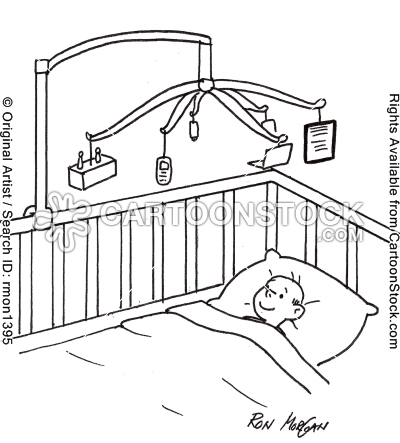
rmon1395lDo you also sometimes get the sneaky suspicion that babies today are born to environments such as the caricature above makes fun of?

cute-baby-with-laptop-and-listen-music_422_78796


How about those very same babies’ expectations from the various elements of their environments … before they can walk?  (Do you see how unsatisfied the cutie on the picture above looks?  What a limited capacity of gadgets does the poor thing have at his/her service?)


baby-with-ipad1


Homemade purees?  Gerber cans?  Forget it!An iPad will do very nicely, thank you…


baby-on-laptop


Now this cutie demonstrates what I would call full attention! Won’t you agree?


Here is a dilemma too close to my heart, and it has everything to do with these adorable images, or better, what they represent: traditional methods face a big likelihood to fail – when it comes to teaching, regardless of the age of the learners. I, for one, have been a teacher longer than I have been a mother (one of the absolutely most fortunate ones, at that!)  I am still teaching.  College age “babies” (at the speed I seem to be aging, this attribute is no exaggeration), to be precise.  As we all know, today’s higher education generation owns an array of electronic gadgets.  (They probably were using some or all of those right after birth…or at least before they identified the letter “A” on their child-safe building blocks that their poor parents had gotten them, only to return to get their money back. I don’t believe it would be an exaggeration, if I were to claim that we can’t only talk about a mere exposure, as today’s babies (age bracket fully flexible…) could easily help many of us out when it comes to the use of all these gadgets and   “applications”… I am not at all talking about application of knowledge, of language, linguistics, or any other college-level study subject-related process.  iPhones!  Yes.  iPhones!  They are becoming the teacher’s biggest rival, to express my opinion.  There is no way any of us – even when properly trained, effective, efficient, innovative, fast… – can possibly keep up with the speed at which those tiny inventions provide our students with: instant (and I mean more instant than any instant food choice) information.  And: on practically everything.

There are several more years until I can qualify for retirement from the university.  So: I am not going anywhere.  My students, however, are moving fast toward somewhere – with their “Apps”.  While I was proud of myself having heard the term long before I held an iPhone in my hand (thanks to my daughter and son-in-law, now I have one I can really use without losing my mind over its offerings), my students had been using them for a large variety of searches (scholarly) in the most sophisticated way (with my permission, of course).

My problem is related to the fact that I love my students!  I love teaching!  And I want for them to only admire me – after several decades long of commitment and dedication to teaching!  My knowledge, my teaching styles, methodologies, culture-specific insights, to be exact.  Picture this scenario, please: We are in a German composition class when a student happens to trust me in the asking of a specific phrase, or the meaning of an adage for the German culture.  Bear in mind, if you will, please, that this particular sweet soul asked me – instead of pressing on one of those magical buttons for a jet-speed answer on his/her iPhone that happens to be lying next to his laptop that happens to serve as a tray for the time being under his/her iPad.  Before that student’s voice travels in to my ear, the answer is found.  By one of those Apps.

Do I need to say more?

I miss those admiring eyes I used to receive from my students whenever I gave them a piece of information they hadn’t ever heard before.  Or, couldn’t find at their fingertips. Literally, information is at their fingertips…and they can, do and will rely on them.  Their electronic teachers, that is.  The privileged ones to get most of my (!) students’ awed attention.

I wish I were an App.!  If only I were an App.!  If I were an App., … If I had been an App., …

~ ~ ~ ~ ~ ~ ~ ~ ~ ~ ~ ~ ~ ~ ~ ~ ~ ~

Do you have a similar story?  Remember it doesn’t have to confine itself to a classroom setting.  We all probably have a very young person in our lives who ever so easily can handle one of the electronic wonders of our era by the time we (those of us who are a bit older than 1) can spell a new App.   I would love to hear from you!  In the meantime, much success to you in keeping up with your children, grand children, nephews, nieces who may be throwing a look at your direction the way my beautiful daughter always does when she sees me texting…

2 Comments

Filed under Reflections

It still may not be too late for Amira Osman Hamed

869893-woman-faces-flogging-for-uncovered-hair

Amira Osman Hamed: Not a mere name but as real of an individual as you and I.


As I am writing this post on Saturday, the 28th of September, “a day” old news according to a Bustle article by  Nathalie O’Neill claims the trial for Amira Osman Hamed, the Sudanese woman who refuses to cover her hair has been postponed from September 19 to November 4.  This time frame is critical, as her case – while “hot” early September now faces the risk of being put on the back burner by her supporters.  Ordinary life will take over.  We know it too well. It always does.  I am, therefore, repeating the plea initiated by poet4justice on a September 19, 2013 post titled Refusing to cover her hair in public.  You may remember my reblogging of that post. Today, I am revisiting Hamed’s predicament in the hope that you may take the time to support her rights as a human being.  Please note the following specifics for your convenience, if you were to decide to sign the petition to get some lawmakers to listen to the worlds of sane voices:

Amnesty Organization Australia petition site . To sign up from the United States, on the standard form, you will be asked the USA phone code for the world.  It is 001 (no individual state codes will do).  Also, the USA zip code for the world is 1511 (no individual zip codes will do).

Should you want to share the Amnesty International Australia plea to petition on behalf of Amira Osman Hamed, the following are provided for you by the site itself (no credit to me):

Share on Facebook

Share on Twitter

Share via E-mail

Leave a comment

Filed under Reflections

#DailyBookQuote 20Sep13 : Thomas Mann’s The Magic Mountain

My heartfelt thanks are with you, dear bhuwanchand, for giving me the chance to reblog from your work with utmost enthusiasm and conviction.  Long ago, I had posted an interview by  Ted Koppel with Morrie Schwartz including his following words that had been haunting me since I first read them (as writtten by Mitch Album): “Death ends a life, not a relationship.” The key concept in your post, “love”, is, to me, the only power we can rely on in surpassing death. And there, certainly is no reason that can rule out such permanence.

Bhuwan Chand's avatarWhatever It is Worth...

#DailyBookQuote : 20th September 2013

 Thomas Mann

–          Thomas Mann (June 06, 1875 – August 12, 1955)

–          Thomas Mann’s The Magic Mountain

In this dizzyingly rich novel of ideas, Mann uses a sanatorium in the Swiss Alps, a community devoted exclusively to sickness, as a microcosm for Europe, which in the years before 1914 was already exhibiting the first symptoms of its own terminal irrationality. The Magic Mountain is a monumental work of erudition and irony, tension and intellectual ferment, a book that pulses with life in the midst of death.


View original post

Leave a comment

Filed under Reflections

Spaghetti-eating Chickens


If you were anything like I am, you would start craving for food as soon as you see it in a movie.   Such as in the book-based “Under the Tuscan Sun” (one of my all-time favorite films).  The “Oda a San Lorenzo” scene here says it all, doesn’t it?

During my life in Turkey and a few years after I settled in the States, I was convinced that only Turkish people knew how to enjoy good food – regardless of the occasion, festive or not. Good company over prolonged meal times, much talk and laughter as main ingredients. The Haiku below – on my son-in-law’s profession (a chef in Turkish cuisine) – may give you an idea about what I mean:

flour, water, salt, hands,

diligence, speed, energy,

hot plate: his food art

My world vision was not at all overly limited for me to assume such an ethno-centric attitude.  Thanks to my father’s research projects my family and I had explored German culture long before Germany began to have issues with its 1961 invitation of Turks as its workforce.  Still, I started living here feeling sorry for every non-Turk for being unaware of the long-lasting pleasures of food – when shared with someone.  Oh, did I realize (though not early enough) how wrong I was!  This summer, then, I found out that good food can feel like the sight of a world wonder when consuming it even with strangers.  (No, I am not talking about the spaghetti-eating chickens, mind you…)

images

images-1


If you read my post from a short while ago, “Finton’s Landing: A Writer’s Dream” you would know my joy dance-kind of words about having discovered this spectacular B&B (and no, the dear owners don’t happen to be my clients on whose behalf I am writing this piece – wait…I have no clients…  Joke aside; I can only hope that my amateurish picture-taking skills do at least some justice to what an oasis they have over there).  On top of it all, their other house guests – three lovely couples, turned out to be some of the most delightful people I have ever met.  Picture now, if you would please, Frances Meyes in the film scene above.  But first take her away – we have never gotten to see the delectable cooking and baking skills of our modest and graceful chef.  Then make her companions’ table of lunch feast about festive breakfast settings and tastes for every one of those three days.  And don’t forget to add to your imagination’s eye “my” deliciously talkative, charming, humor-filled, utmost friendly, ever so lovely group of co-breakfast-enjoyers (no need to call the syntax or semantics police; I promise not to use this non-word again…).

My photographs of the inn unfortunately lack fully all the colors of our joined anticipation for and enjoyment of the aromas that every time gained a life right before our eyes at the breakfast table.  We were having too much of a good time to think about taking pictures of ourselves devouring our food of large variety of color, shape and palate-pleasing texture.  Perhaps a Haiku poem I wrote quite a while ago is better capable of expressing what my people-less pictures couldn’t:

Bolla Chardonnay

leftover meal with old friends

laughter for dessert

Oh no, no, none of us had any wine in the morning!  (Evening times, though, were a different story.)  While I didn’t compose the verses based on my experience with my new friends, in retrospect the word “old” expresses a different kind of anticipation on my behalf; namely, to become old friends with these harmonious couples.

What on earth does the content of my text have anything to do with its title, right?  My answer is simple enough: during each and every one of our breakfast celebrations and pre-dinner wine cocktails on the patio (two nights at least, also post-dinner…), we all visited an anecdote the leading brilliantly hilarious new friend told us on the first day when we all met each other the first time.  Yes, about spaghetti-eating chickens “of Kentucky”.   A beautiful woman with a smiling voice and most generous soul (I can’t believe I had the nerve to burden her with a confession of a serious dilemma in my life) was our storyteller.  For fear I may recite her details incorrectly, I will only tell you how Kentucky was involved in this remarkable announcement (I, for one, have never seen any chicken eating spaghetti…) – through this sweet lady’s 8-year old niece.  Apparently, she and her family have actually witnessed (theirs or a neighbor’s) chickens gobbling on old spaghetti one day.  Can you now hear “my” group laughing over and over about a potential aspect of their human food consumption?  We had a ball when everyone – while enjoying our chef’s aesthetic presentations and exceptional food assortments – contributed to our laughter buffet with the name of an Italian spaghetti sauce selection for those lucky poultry representatives…

Do you, dear reader, have a story of your own – one that has left you with a wonderful taste of and for life?   Or can you relate to what I admit here to have done: being convinced that only one or the other cultural group knows how to enjoy food with company as a life experience?  Please share.  I’d absolutely love to hear from you!

2 Comments

Filed under Reflections

Naivete. Or, is it?

Have you ever been subjected to a treatment where rules were bent beyond their breaking point for the ultimate advantage of another, while you were kept systematically out of the loop to which your lifelong work of dedication and commitment of noted quality had given life?  If so, what was – or continues to be – your coping mechanism?

5 Comments

Filed under Reflections