Category Archives: Reflections

…time…

Have you considered the possibility of living with the bare minimum but doing so literally – with no *indulgences we have been taught to seek? Under the obvious and imminent but still sweet pressure of time’s scheduled visit with us all?  (*I bear no intent to a religious context here.)

“It was a favorite expression of Theophrastus that time was the most valuable thing that a man could spend.” ~ Diogenes

th

Do we – as humanity at large and as its influential members – handle time, the only irreplaceable gift of living in the most befitting matter? What are the consequences of our related choices on humans on a large scale and on one person?   

Leave a comment

Filed under Reflections

Join us in our passion for poetry!

Whitman_at_about_fifty

(Photo: Free Online)

To have great poets, there must be great audiences too.

Walt Whitman (1819-1892)

Good Sunday!

If you are here right now, then you are a reader – regardless of how much of my text you will read (imagine: I arrived at this no-brainer-conclusion all by myself…gives out a sneaky smile…). Then, of course, there is the writer in you.  And as one, you know how the mysterious concept called “inspiration” works at times (or how it doesn’t). William S. Peters Sr. to whom I am proud to refer as my publisher has done it again; namely, envisioning and implementing together with Jamie Bond the Year of the Poet – monthly poetry books birthed through collaboration between Inner Child Press Ltd. (ICP) and The Creating Calm Publishing Group.

In 2014, the permanent contributors from among the large number of the ICP authors had included Jamie Bond, Gail Weston Shazor, Albert ‘Infinite’ Carrasco, Siddartha Beth Pierce, Janet P. Caldwell, June ‘Bugg’ Barefield, Debbie M. Allen, Tony Henninger, Joe DaVerbal Minddancer, Robert Gibbons, Neetu Wali, Shareef Abdur-Rasheed, Kimberly Burnham and William S. Peters, Sr. In the new year, there will be several new names, including Ann White, Keith Alan Hamilton, Teresa E. Gallion, Katherine Wyatt and myself. I know the remarkable penmanship of all these dear individuals and our shared passion for poetry is evident in every communication we have within or outside the territories of the books of mention. Then, there are featured poets for each month outside the “Core” contributors to poetry, all of whom have the same dedication to this literary art. As the ICP web page states, “[t]he objective is to bring the poetry community together with the various cross demographic representations found in gender, religion, geography, culture and ethnicity. We hope you enjoy the myriad of perspectives represented here (The Year of the Poet).”

2015 will be filled with writing and reading poems for me each month (if not far more often). I want to hope you will be a reader of these poetry books that are bound to surprise you with the promised beauty of one poem after another, month after month.

May the new year be and become all that you wish it to be and become for yourself and your loved ones! I look forward to your visit in 2015.

Yeni-Yıl-2015

3 Comments

Filed under Reflections

“İstanbul’u Dinliyorum” ~ “I Am Listening to İstanbul”

Is there a place that has once landed in the depth of your being? Do your feelings and thoughts take you there once in a while or often? Lately, it has happened to me. Again. With the yearning having risen from casual conversations with close friends. Of all the possible regions that had long ago taken a piece of my heart, it was the city many find to be impossible to describe. In my case, there is no interest whatsoever to make even an attempt to say anything about this phenomenon other than having a well-known poem speak it all.

Like the poet I am respectfully bowing before, I, too, am listening to İstanbul today but to İstanbul of my heavily aged memories. And I do so in the hope that this world city will reconnect me to my mother’s grave – long lost in its physicality…

The Turkish original by Orhan Veli Kanık

İSTANBUL’U DİNLİYORUM

İstanbul’u dinliyorum, gözlerim kapalı
Önce hafiften bir rüzgar esiyor;
Yavaş yavaş sallanıyor
Yapraklar, ağaçlarda;
Uzaklarda, çok uzaklarda,
Sucuların hiç durmayan çıngırakları
İstanbul’u dinliyorum, gözlerim kapalı.

İstanbul’u dinliyorum, gözlerim kapalı;
Kuşlar geçiyor, derken;
Yükseklerden, sürü sürü, çığlık çığlık.
Ağlar çekiliyor dalyanlarda;
Bir kadının suya değiyor ayakları;
İstanbul’u dinliyorum, gözlerim kapalı.

İstanbul’u dinliyorum, gözlerim kapalı;
Serin serin Kapalıçarşı
Cıvıl cıvıl Mahmutpaşa
Güvercin dolu avlular
Çekiç sesleri geliyor doklardan
Güzelim bahar rüzgarında ter kokuları;
İstanbul’u dinliyorum, gözlerim kapalı.

İstanbul’u dinliyorum, gözlerim kapalı;
Başımda eski alemlerin sarhoşluğu
Loş kayıkhaneleriyle bir yalı;
Dinmiş lodosların uğultusu içinde
İstanbul’u dinliyorum, gözlerim kapalı.

İstanbul’u dinliyorum, gözlerim kapalı;
Bir yosma geçiyor kaldırımdan;
Küfürler, şarkılar, türküler, laf atmalar.
Birşey düşüyor elinden yere;
Bir gül olmalı;
İstanbul’u dinliyorum, gözlerim kapalı.

İstanbul’u dinliyorum, gözlerim kapalı;
Bir kuş çırpınıyor eteklerinde;
Alnın sıcak mı, değil mi, biliyorum;
Dudakların ıslak mı, değil mi, biliyorum;
Beyaz bir ay doğuyor fıstıkların arkasından
Kalbinin vuruşundan anlıyorum;
İstanbul’u dinliyorum.

Own English Translation, December 20, 2014 (unedited, unrevised)

I AM LISTENING TO İSTANBUL

I am listening to İstanbul with my eyes closed

In a gentle touch, first a wind breezes;

Leaves sway on trees

Without a hurry;

Far, very far away,

There are the never-stopping bells of the water-carriers

I am listening to İstanbul with my eyes closed.

~ ~ ~

I am listening to İstanbul with my eyes closed;

Birds are passing by, then;

From high above, in flocks, in screams.

The nets are being pulled in the kiddles;

A woman’s feet touch the water;

I am listening to İstanbul with my eyes closed.

~ ~ ~

I am listening to İstanbul with my eyes closed;

It is crisp inside the Covered Bazaar

Mahmutpaşa, so very chirpy

Its courtyard is filled with pigeons

The beats of hammers are rising from the docks

In the glorious spring wind, the smell of sweat;

I am listening to İstanbul with my eyes closed.

~ ~ ~

I am listening to İstanbul with my eyes closed;

I am intoxicated by the celebrations of the past

A waterside mansion with its dimmed boathouses;

Within the murmur of the died out southwesters

I am listening to İstanbul with my eyes closed.

~ ~ ~

I am listening to İstanbul with my eyes closed;

A coquette passes by the sidewalk;

Profanity, chants, songs, wolf whistles.

Something falls off of her hand;

It must be a rose:

I am listening to İstanbul with my eyes closed.

~ ~ ~

I am listening to İstanbul with my eyes closed;

A bird is fluttering on her skirts;

I know if you have fever or not;

I know if your lips are wet;

A white moon rises behind the pistachio nuts

I know it from the beat of your heart;

I am listening to İstanbul.

1 Comment

Filed under Reflections

“I Love You From Afar” (capitalization, per Turkish)

When you are in love, words – at times – don’t suffice to express your feelings you can only register in your heart, would you agree? Then, you find yourself in a quest for a translation of what lies joyfully heavy inside your soul. That translation sometimes becomes a real one, having transcended from your essence to another. Or, the yearned for essence translates yours. I want to hope that you would like my translation of “Uzaktan Seviyorum Seni” by Cemal Süreya as my reflection on romantic love on this Sunday.  

The Turkish Original:

UZAKTAN SEVİYORUM SENİ

uzaktan seviyorum seni
kokunu alamadan,
boynuna sarılamadan
yüzüne dokunamadan
sadece seviyorum

öyle uzaktan seviyorum seni
elini tutmadan
yüreğine dokunmadan
gözlerinde dalıp dalıp gitmeden
şu üç günlük sevdalara inat
serserice değil adam gibi seviyorum

öyle uzaktan seviyorum seni
yanaklarına sızan iki damla yaşını silmeden
en çılgın kahkahalarına ortak olmadan
en sevdiğin şarkıyı beraber mırıldanmadan

öyle uzaktan seviyorum seni
kırmadan
dökmeden
parçalamadan
üzmeden
ağlatmadan uzaktan seviyorum

öyle uzaktan seviyorum seni;
sana söylemek istediğim her kelimeyi
dilimde parçalayarak seviyorum
damla damla dökülürken kelimelerim
masum beyaz bir kağıtta seviyorum…

(Own Unedited, Unrevised Translation – 12/13/2014)

I LOVE YOU FROM AFAR

I love you from afar

without being able to smell your scent

to embrace your nape

to feel your face

I merely love you

from afar, I just love you

not holding your hand

without touching your heart

nor dissolving in your eyes

in spite of today’s three-day love fads

not wildly but like a man, I love you

I just love you from afar

without wiping off the two tears running down your cheeks

not joining you in your heartiest laughs

nor crooning together with you your most favorite song

from afar, I just love you

without disappointing,

not pouring out anything

without destroying

not making sad,

nor causing a cry, I love you from afar

I just love you like that from afar;

by shredding in my tongue

every word I want to tell you

I love you

I love you on a white piece of paper

while my words fall down, drop by drop…

Leave a comment

Filed under Reflections

Nostalgia: What is it anyway? And: May it be shared?

No worries. I am not going to get into any definitions or discussions on or questions about the concept of “nostalgia” or delve into the dissection of any other notion today.

Every year during my month of birth, December I tend to become quite nostalgic for Sinop. The extent to which I miss that spectacular world region in Turkey increases with dramatic leaps in these thirty-one days. To the point that  I pay several desirous visits to that small peninsular town. Forcibly, only in my mind…Do you think you can now allow the relentlessly enticing aroma of the Turkish coffee I have prepared for your imagination’s sake leave my kitchen to travel all the way to you? Can you then make yourselves at home and enjoy your warming drink one sip at a time, while we all have our eyes on the two reasonably short video shows? Enjoy your “me”-time!

“Torul Hartaması” (by FUAT SAKA) is the name of the musical piece to which KUZEYİN UŞAKLARI HALKOYUNLARI TOPLULUĞU in the video is performing for a folkloric dance competition in Turkey. Art Director: DR. ERDİNÇ ÖZTEN; Music Arrangement and Soloist: İHSAN EŞ; Music and Dance Choreography: ÖZEL YAPIM GRUP.

2 Comments

Filed under Reflections

…a sip of a love story…

Bir acı kahvenin kırk yıl hatırı vardır…
A cup of bitter coffee is worth for forty years… 
Last week, I had shared with you my newly found self-indulgent ritual: making coffee in the Turkish-Greek style every day and enjoying it sip by sip with a small piece of chocolate award waiting for me on the saucer of the tiny cup. Today, I would like to invite you to take a short trip with me to an audio narration in Turkish of what is claimed to be a true love story, told by Recep Atasoy. This story – “Tuzlu Kahve” (“Salted Coffee/Coffee with Salt”), I have found out, has multiple versions in written but also in spoken Turkish texts, including one from the time of the Ottoman Empire. The one here spins, in sum, the following modern tale of love:
They were at a party. The gorgeous young woman attracted the attention of the young man. Many men were after her. Nevertheless, he asked her, if she would have coffee with him.  Not having noticed him at all throughout the festive gathering, she accepted his invitation out of sheer politeness. They went to the cafe nearby. His nerves made him unable to talk. His silence began to make her uneasy, when she said she had better go. At that moment, he called for the waiter with a sudden movement: “Could you please bring salt for my coffee?”
People close to their table turned toward him with puzzled impressions on their  faces. Salt for coffee! He turned bright red out of embarrassment but poured the salt into his coffee with no hesitation. And without skipping a beat, he drank it to the end. With obvious curiosity, she commented: “You…have an unusual taste.” He then started to narrate to her about his childhood, how he used to always play at the seashore and in the sea and how its saltwater had been always present in his palate. “I grew up with this taste,” he said, “I liked this taste very much. That’s why I put salt to my coffee. Because, whenever I feel the salt’s taste, I remember my childhood, our home by the sea and my happy family…My parents still live by that sea. I miss them and my home…very much.”
While he was talking, tears filled his eyes…She was taken aback by the things she had heard. A man who in such an honest way opens up to a woman, a man who misses his home, his family to this extent, must be someone who loves home life, family, she thought. Someone with sensitivity to home life.  She, too, started to talk. Her home was also far away. Just like her childhood was…She told him about her family. Their conversation had become very lovely…Sweet and warm. 
And, as it so happens, their conversation became an exceptionally beautiful beginning to our story…

They continued to see one another, and, just like in any beautiful tale, the princess got married to the prince. And they lived happily ever after. Whenever the princess made coffee for her prince, she put one spoonful of salt into it, always…After all, she knew he liked it that way… 

Forty years later, he bid farewell to the world. He had left a letter to his beloved wife, to be opened after his passing:

“My love, my one and only, please forgive me. Forgive me, for I have built our entire life together on a lie. I lied to you only once…About the salted coffee. Do you remember the first day we went out together? I was very anxious and tense, to the point that I asked for ‘salt’ instead of sugar. I felt so ashamed with you and everyone else looking at me, stunned, that I went on with a lie. I could not have imagined that this life was going to be the foundation of our relationship. Many times, I wanted to tell you the truth. But each time, out of fear, I decided not to. Now, however, I don’t need to fear anything, since I am dying…Hence the truth: I don’t like salted coffee! Such taste is peculiar and disgusting. But I had coffee with that disgusting taste since I was with you the first time. And without an ounce of regret, at that. To be with you was the biggest happiness in my life and I owed that elation to salted coffee. If I were to be born once more, I would like to live everything anew, to get to know you anew and to spend my entire life anew with you, even if a second life were to mean for me to have to drink salted coffee day after day after day…”  

The old woman’s tears entirely soaked the letter.

One day, someone who knew their story asked her: “What is coffee with salt like?” 

Tears welled in her eyes… 

Then she uttered: Very sweet! 


Leave a comment

Filed under Reflections

…on self-indulgence…

Do you self-indulge? Do you, in other words, allow yourself what I too often hear from people drained by work, my old self included, refer to as the “me-time”?

I go on Google, type the word “indulgence” in the search box and, this time -instead of shiver before- glory in the one-word meaning looking back at me: “a luxury.”  Throughout the most recent decades of my life, I had assumed to be guilty of such preposterous behavior as permitting myself any type of luxury.  Are you now tensing up, overcome by the same sense of guilt as I have been for too many years? We are, after all, programmed to work to be able to continue to work in order to work some more, are we not? At least, some of us were and still are so. If what I am saying right now sounds familiar to you, then I can rely on your continued interest today, can I not? (Not for too long, though, no worries…)

As if in a nightmarish trance, I used to work, work, work, and then, work some more while attending as well as I was capable only to my family, friends and work-related commitments. I, myself, was not on my agenda. Ever. Not as long as I can remember. Then came a bodily reminder. An emotional one ensued.  I do self-indulge now and am proud of how I cherish my “me-time”. Especially, since my self-indulgence occurs through a simplest and littlest time-consuming “luxury”: I drink Turkish coffee I prepare daily for myself, diligently adorning the saucer of my tiny Turkish coffee cup with one square of dark chocolate (two squares, if from a miser of a box…), taking a tiny cut from it (or them) each time I sip a drop. If you look closely at the photo below, you will see the cast of my self-indulgent ritual.

for a Sunday reflection

[Photo credit: To self]

In Turkish – my native tongue as you know (or will find out for the first time today, if you happen to be stopping by just at the moment), there is a saying, which has gone on to songs as well as frequent citations: “Bir fincan kahvenin kırk yıl hatırı vardır.” ~ “A [demitasse] of Turkish coffee will be remembered for forty years (Coffee Drinking Habits in Turkey).”

There is a translation of the same saying I happen to like in particular: “[I]f one has been offered a demitasse of coffe[e], [s/]he is obliged for forty years to the one who offered the coffe[e] (Turkish Coffee).” My preference for this translation option is for selfish reasons: since I am offering you my own demitasse of Turkish coffee (virtual realities are all that we have these days), will you be please kindly “obliged” to be here reading my posts for forty years to come? (Only a small feat, isn’t it? More later…)

On a lighthearted note still, I now would like to invite you to the ending of my post via a video on instrumental Turkish music by Grup Gezgin with the band’s designated title signifying my focus today, “Bir fincan kahvenin kırk yıl hatırı var”:

http://www.mynet.com/video/muzik/grup-gezgin-bir-fincan-kahvenin-40-yil-hatiri-va-1484576/

2 Comments

Filed under Reflections

“Nazım Hikmet’i hatırlıyorum…”/’I am thinking of Nazım Hikmet…’

41_Hikmet_hires-FLAT

Nazım Hikmet (1902-1963)

[Photo Courtesy: Free Online Link]


Nazım Hikmet’i hatırlıyorum…

nasıl da iyi tanımış yurdun bazı gerçeklerini

kadınımızdan biteviye esirgenenleri

ister olsun tek bir başına ya da kocasının yanında

olsun varsın bir bebesi, o verici böğrünün öz yuvasında…


“ince, küçük çeneleri, kocaman gözleriyle

anamız, avradımız, yarimiz” kadınlar

ama anaya yakışan saygıyı analığında bile alamayan analar

“soframızdaki yeri öküzümüzden sonra gelen”…


doğurmasa, erkeğinin göze alamayacağı taze hayatı ona veren

herkes ana oluyorları kendine defalarca dedirten

gene de yüzlerinden tebessüm nadiren eksilen

“aynı yorgun alışkanlık” çemberine mahkum edilen kadınımız…


Nazım Hikmet’i hatırlıyorum…

nasıl da iyi tanımış seninle beni,

onu şunu bunu

bizi sizi onları

bilmiş çok öncesinden bugünü geçmişi ve de geleceği

bütün dünya bir coşkuya muhtaç bahane ararken bir kutlamaya

‘avradını, yarini’ analıklarında bile hiçe saymaya

ant içmiş erkeklerimizin tek toplar damarlı aile sofrasına

katmış cömert bir asaletle bu dahi destanına…


(Free-translation in Turkish; unrevised/unedited. The distinction between the singular and plural  form of each gender in the version below is intentional: Nazım’s “women” meet here my “woman.”)

I am thinking of Nazım Hikmet…

He knew too well our country of birth

The endless deprivation of our woman from life

Whether solo or adjacent to her husband

Or together with her baby at the core of her selfless chest…


Women “with their fine, small chins and large eyes;

Our mother, wife, lover”

But mothers who even in motherhood are robbed of motherly respect

Women “whose places for mealtimes come after our ox”…

The one giving fresh life to her husband – who wouldn’t dare, if she hadn’t…

The one who tolerates the frequented ‘everyone becomes a mother’- shout

Not neglecting a smile from her face nevertheless

The one who gets the sentence of the deadening “same tired“ rut…


I am thinking of Nazım Hikmet…

How well he knew you me her us them

The present the past the future of his never forgotten home

So well…

That with his noble saga

He welds our woman to the single-veined family table of our men

Who have sworn to belittle their ‘wives, lovers’ even when they are maternal

While in search of such a joy the entire world seeks an excuse to celebrate …

Leave a comment

Filed under Reflections

Education – past and present…how about the future of it? (The end of the article)

On this Sunday, we have come to the end of my rather long article on education. I hope, though, that you will help me to continue this discussion by sharing your own thoughts and contemplations on the subject, especially, when it comes to the matter of the future of education. Not only in a location where we reside and work but rather through a borderless thought processing. Does each of us, if any at all, have responsibilities as far as at least providing an input to the designated teaching and learning systems? If so, what do we aim to accomplish, if anything at all? Why does this all matter; education, that is? To what extent should it matter, if it is vital in our lives at large? What does it mean to light the fire for anything? For education. Or for life.

~ ~ ~ ~ ~ ~ ~ ~ ~  

THE FUTURE OF EDUCATION: A SEMI-STRUCTURED SPECULATION

  1. Self-Determination Theory

The “theory of motivation,” known in the field of education as SDT has specific areas of concentration that can be summarized as in the following compact overview:

It is concerned with supporting our natural or intrinsic tendencies to behave in effective and healthy ways. SDT has been researched and practiced by a network of researchers around the world. The theory was initially developed by Edward L. Deci and Richard M. Ryan, and has been elaborated and refined by scholars from many countries. Deci is currently a professor in the Department of Clinical and Social Sciences in Psychology at the University of Rochester, in Rochester NY, USA; Ryan, a clinical psychologist, and was recently appointed as Professor at the Institute for Positive Psychology and Education at the Australian Catholic University in Sydney, Australia.  Together and separately Deci and Ryan have promoted SDT through theory, research and their ongoing training of scholars (www.selfdeterminationtheory.org).

Non-theorist teachers of our century are known to have experimented with SDT at different levels of schooling in order to “kindle the gift of life” in their students, as Dr. Timothy A. Pychyl, professor of psychology at Carleton University reflects in his blog entry, “Education Is Not the Filling of a Pail, But the Lighting of a Fire.” Bringing the field-specific terminology to our times, Dr. Pychyl discusses SDT as the “fire triangle of motivation” on the basis of the theory established by Richard Ryan and Edward Deci:

Their theory is based on three fundamental human needs: competence, autonomy and relatedness. Their science (and there has been lots of it) has demonstrated how each need or component contributes to motivation. The art is in addressing each component as part of the curriculum and regulating them in the students’ environment to maximize interest and approach behaviors (Pychyl).

Pychyl has his own SDT-adjusted approach, adopted from Wilbert J. McKeachie, retired professor of psychology, for which he assumes “autonomy and relatedness together […] as an overall ‘Will’ component,” while he takes “competence as a ‘Skill’ component.” He arrives at the conclusion that the educator needs both constituents “to light a fire for learning.”

Professionals in the field will find a refreshingly different angle in Timothy A. Pychyl’s commentary: his belief that the “Will&Skill” attainment is notsimply the students’ responsibility,” as largely expected by the teachers. When students “lack the will for learning,” he deliberates, they won’t “come into the classroom on fire for learning.” At the same token, when they “lack skills,” they won’t “think they can succeed at a task” and therefore, “won’t feel very motivated to try.”

While in his reflections Dr. Pychyl doesn’t delve at all (not a goal for him) into the Academic philosophy I have been stressing for its crucial role in the service to humanity at large, they fill a gap the majority of today’s designated debates rules out. In exact line with this paper’s argument, he announces with conviction “that ultimately the student must be the fuel for the fire,” but he also makes sure to assign the other critical responsibility to the individuals with whom it belongs: “but that doesn’t mean that educators don’t have a role in lighting this fire. At the very least, we have to spark the students’ interest (Pychyl).”

How this educator suggests to shift the highly imbalanced attention given today to “cognitive activity” to the factor of emotional involvement by students in their own learning process, is yet another all-inclusive teaching trait shedding the field a much-needed “searchlight” (Chesterton) – and yes, not only with learners in mind but also teachers. For clarity: Dr. Pychyl – drawing his argument from that of Carroll Ellis Izard, author of The Pyschology of Emotions, identifies “interest as one of our primary emotions […]” and as such being important “motivational properties.” The question he raises resonates the core purpose of our travel from Ancient Greece to our times and spaces: “Where’s the fire here without that emotion of interest to ignite it? (Pychyl).”

In order to leave something for imagination, I choose not to elaborate on related questions at this point in time, though several come to mind. I suspect one cliffhanger to be awaiting us in the earlier presentations on the role and function of art in all of this. I will, however, bring this section to an end by providing us with a most meaningful quote from Dr. Pychyl’s text:

Tips, tricks and techniques are not at the heart of education – fire is. I mean finding light in the darkness, staying warm in the cold world, avoiding being burned if you can, and knowing what brings healing if you can cannot. That is the knowledge that our students really want, and that is the knowledge we owe them. Not merely the facts, not merely the theories, but a deep knowing of what it means to kindle the gift of life in ourselves, in others, and in the world (Palmer, p. x; Foreword to O’Reilley, 1998).

While theories for teaching attempt to meet the growing needs in our times for different conceptualizations of education than what we are being given, living anecdotes, such as those mentioned in the section above, manage to instill optimism in the observer, even in the active participant. Alternative thought processes, then, suggest a promise for the thorough fulfillment of the ultimately desired outcome, such as the teachings of an Indian guru: Maharishi Mahesh Yogi.

  1. Transcendental Consciousness

Born around 1918, died in 2008, Maharishi Mahesh Yogi is claimed to have “achieved world renown as the Indian guru who inspired the Beatles and was said to have persuaded them to give up drugs (Malise Ruthven, “Obituary.Maharishi Mahesh Yogi”).” In his obituary text, Ruthven, an academic and writer, stresses “the highly successful empire” Mahesh created “out of selling the spiritual techniques practiced by yogis and Brahmins for millennia to companies as aids to stress management.” He continues to add, however that “he never abandoned his claim to be transforming humanity’s consciousness in the direction of universal harmony and peace (he was happy to claim credit for ending the cold war).”

What seems to be the conceptualization of education within the context of Mahesh’s “dynamic philosophy” was his “call to Transcendental Meditation” – a training intended to “inspire a disheartened man and strengthen a normal mind” in order to acquaint one’s self “with the inner divine consciousness (Ruthven).”

Maharishi Mahesh himself has been quoted as having asserted the following as the outcome of education as perceived by him:

Developing the full creative potential of consciousness makes the students masters of their life; they spontaneously command situations and circumstances. Their behavior is always nourishing to themselves and everyone around them. They have the natural ability to fulfill their own interests without jeopardizing the interests of others. Such ideal, enlightened individuals are the result of ideal education – Consciousness-Based Education (consciousnessbasededucation.org).

Two levels of consciousness are of focus in this context – both being representative of “the state of normal human consciousness”: Transcendental and Cosmic Consciousness. The first is defined as “a state of inner wakefulness with no object of thought or perception, just pure consciousness aware of its own unbounded nature. It is wholeness, aware of itself, devoid of differences, beyond the division of subject and object (consciousnessbasededucation.org).” The training for Cosmic Consciousness, then, is conducive to peacefulness:

The bliss of this state eliminates the possibility of any sorrow, great or small. Into the bright light of the sun no darkness can penetrate; no sorrow can enter bliss consciousness, nor can bliss consciousness know any gain greater than itself. This state of self- sufficiency leaves one steadfast in oneself, fulfilled in eternal contentment.

It is a field of all possibilities, where all creative potentialities exist together, infinitely correlated but as yet unexpressed. It is a state of perfect order, the matrix from which all the laws of nature emerge, the source of creative intelligence (Global Country of World Peace).

At this final stage of the paper, one is reminded of Plutarch’s design of the ideal statesman in the face of Maharishi’s idea of world peace through consciousness-raising meditational teaching – with the inherent difference being the time- and space-dictated need of Ancient Greece: noble leaders with love for the works of virtue. Once again, any form of rigid estimation of the future of humanity within the realms of the future of education would be in vain. Would it be feasible to apply serious research on the ideas mentioned here that are still pending under the auspices of theory? Interest will tell.

The two components I have brought into daylight in this essay’s final section only constitute a mere angle into the possibilities humanity has as offerings to improve its present as well as its future through education of its children within a context that is capable of revolutionizing the stagnant teaching methodologies hiding among dead trees in a forest of brand new potentials. Whether theories, such as SDT, or the concept of schooling by Mahesh for the purpose of transcendental consciousness awaits the future of humanity in its improved state of being is impossible to estimate. For there are too many variables – outside ‘interest’ – that can’t thus far be incorporated into any known form of today’s educational systems as was possible for Plutarch to documentable degree. There is a constant, however, that has proven to surpass time and space – even in this essay’s illustration attempts alone. In the words of Plutarch, that component of humanity – or better yet, its aorta, has proven itself to be unchanging as much as we know history to have repeated itself:

Love, like ivy, is clever at attaching itself to any support (PL MOR 1 P241).

Let us not merely maintain love for personal support.

Let us ignite love’s fire to help us direct it to noble conduct and the works of virtue (Plutarch).

Let us turn education from its losing state of having turned against itself (Chesterton).

Let us instill in young individuals, in schools or not, their value as a harmonious personality, not as a specialist (Einstein).

Let us teach children, in schools or not, what they have inside of themselves: pearls waiting to be cultivated with ardor and persistence (Harris).

Let us show the youth that people must learn to hate, and if they can learn to hate, they can be taught to love, for love comes more naturally to the human heart than its opposite (Mandela).

Let us light the fire for education, for life, for love.

Leave a comment

Filed under Reflections

Education – past and present…how about the future of it? (Contd. article)

Welcome (back)! My discussion on education will take us today to Mandela’s thoughts on the subject…

~ ~ ~ ~ ~ ~ ~ ~ ~

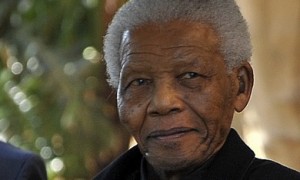
  1. Nelson Mandela (1918-2013)

As with Einstein, the life and works of this world leader of global peace and harmony are also surrounded by studies to such broad and comprehensive scope that I see no need to revisit those areas within the context of my essay. In fact, Mandela is known beyond any significant gaps of information that a collection of his statements on education will suffice to help us remember his intelligence and timeless vitality on global scale.

mandela2-300x180

[Photo: Reuters]

With his assertion that twins with Plutarch’s, the following Mandela announcement needs no interpretation:

There can be no keener revelation of a society’s soul than the way in which it treats its children (Valerie Strauss, “Nelson Mandela on the power of education” in: The Washington Post).

Centering his thought around the future of humanity – children yet once again, the human perfection declares his lesson. And it is impossible to disregard his uniting reference to children at large, not as members of any particular cultural group but rather all within one empowering embrace (“our children”):

The power of education extends beyond the development of skills we need for economic success. It can contribute to nation building and reconciliation. Our previous system emphasized the physical and other differences of South Africans with devastating effects. We are steadily but surely introducing education that enables our children to exploit their similarities and common goals, while appreciating the strength in their diversity (Strauss, “Nelson Mandela”).

As were he to be strolling down the Agora with philosophers of Ancient Greece – with the likes of Socrates or Plutarch, Mandela delivers his own lecture on poetry’s impact on character:

A good head and good heart are always a formidable combination. But when you add to that a literate tongue or pen, then you have something very special (Strauss, “Nelson Mandela”).

Mandela leads us to realize that matters of humanity haven’t much changed since the period of Ancient Greece, since 19th or 20th century-Europe, or in the 21st century:

No one is born hating another person because of the color of his skin, or his background, or his religion. People must learn to hate, and if they can learn to hate, they can be taught to love, for love comes more naturally to the human heart than its opposite (Strauss, “Nelson Mandela”).

‘Love for noble labor and the works of virtue,’ are lines from Plutarch I repeated in this essay twice before. With Mandela’s thought of “love” we are only nearer to a better understanding of the ancient teaching aim. This human perfection declares it as a life value to be taught.

The concept of education as I have outlined in this essay, assigns educators the responsibility of helping students lead a richer and fuller life and developing their mental and spiritual qualities to the ultimate. But in the face of such conclusion, we must bear in mind all along what the referent itself, “education,” does not entail. Or, how fluid the boundaries are in the role distribution between an “educator” and a “student.” Isn’t the entire dynamics, rather, all about who first attains the higher level of consciousness in order to begin to enable the other to recognize humans’ interdependency to one another?

One is urged at this point to consider what the future of education may hold for the future of humanity. Two possibilities emerge as objects for potential deliberations, none as subjects of first-time introduction: an educational theory embedded in the shores of non-revolutionary lands and another one housing on the marginal isles of meditative trainings. The discussion in this final stage of the paper will be – as inherent in its purpose – more speculative than open for scientific affirmation, especially when immediacy were to be of demand.

~ ~ ~ ~ ~ ~ ~ ~ ~

I remain with the hope of your return visit next Sunday for the final section of my deliberations on the state of education: past, present and future. May the rest of your Sunday and your new week be wonderful in every aspect. 

Leave a comment

Filed under Reflections