Education – past and present…how about the future of it? (Contd. article)

(Continued article from last Sunday)

3. Treatise on Poetry, History and Education

For Plutarch, poetry and history constitute the integral elements of Academic philosophy. Poetry and education, then, in the view of this ‘humanist par excellence’ (Encyclopedia Britannica), complement one another:

The Spartan, when asked what he taught, replied: I make honourable [sic] things pleasant to children (PL MOR 6. P9).

This way is the one to help pupils take through their learning toward Plutarch’s ultimate aim and accordingly, carries heavy responsibility in their own improvement of their character:

The memory of children should be trained and exercised; it is the storehouse of learning and the mother of the Muses (PL MOR 1 P45).

Young pupils, Plutarch believes, must be given training in reading poetry, though beyond the metaphorical in order to realize this art will impact character formation and development in the matter people desperately need it later in their lives:

Let poetry be used as an introductory exercise to philosophy. Those who train themselves to seek the profitable in what gives pleasure and to be dissatisfied with what has nothing profitable in it learn discernment, the beginning of education (PL MOR 1 P81).

When pupils “pass from ostentation and artifice to discourse which deals with character and feeling[,]” proclaims Plutarch, “they begin to make progress (PL MOR 1 P421).” By becoming aware on the basis of poetry’s selected principles of their own capability to achieve a higher form of themselves, they will then be able to advance upon a state of being where they can materialize those principles, from which point to enter the path to virtue. Once they achieved that state of being they have attained by themselves, he asserts further, they can contribute to the improvement of others:

Menedemus remarked that: the multitudes who came to Athens to study were at the outset wise; later they became lovers of wisdom; later still orators, and as time went on, just ordinary persons and the more they laid hold on reason the more they laid aside their self opinion and conceit (PL MOR 1 P435).

In the statement above, we see once again the essence of Plutarch’s principle regarding the need for the concurrence of nature, habit and reason in order for the education of character to be achieved. Hence, the interrelated components of the concept behind philosophical education: poetry and history as the two irreplaceable cores of the same element that fine-tunes character. How befitting is the following Plutarch statement, when his ideal of training statesmen from their childhood on is taken into consideration:

We should choose a calling appropriate to ourselves, cultivate it diligently and let the rest alone (PL MOR 6. P215).

And how succinct is his definition of the correctly educated statesman:

Arouse a man to emulate his better self (PL MOR 1 P383).

4. Influence

As stressed at the onset of this article, Plutarch, a phenomenon of human history prompted the development and advancement of essay writing and essayist texts. Far beyond such influence, however, he also left his impact on the emergence of the genres of biography and historical writing (Encyclopedia Britannica). His academic and philosophical presence in Europe is said to have stayed at its peak from the 16th through the 19th century the least.

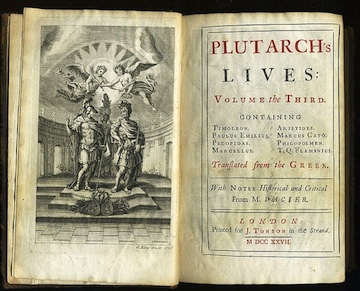
His literary impact on following generations of authors has been immense: Sir Philip Sidney, Edmund Spenser, Ben Jonson, William Shakespeare, John Dryden, John Milton, Robert Herrick, George Chapman, Jonathan Swift, Walter Savage Landor, William Wordsworth, Robert Browning, Mary Shelley, and H.G. Wells in England; Ralph Waldo Emerson and Herman Melville in the United States; J.W. von Goethe and Friedrich von Schiller in Germany; and French drama of the late 16th and the entire 17th century; Jacques Myot’s introduction of Plutarch to Sir Thomas North, and Shakespeare’s three plays sourced by Sir Thomas North’s English translation of Lives and from then on, the entire English-speaking regions of the world (Stanford Encyclopedia of Philosophy).

 Plutarch.LivesXYZ

[Photo: Wikipedia]

When compared to other Ancient Greek philosophers, Plutarch is not viewed as a profound figure in the field of philosophy. While he may not have added a new component to the arena of philosophy at large, scholars assert that he was instrumental in enabling his students and the public to comprehend the established systems – and not only in Greece but wherever he traveled. I join many critics who see in him ‘a humanist par excellence’ – and therefore justify the extensive space I reserve in my essay on the discussion of his relevant accomplishments as an educator serving humanity.

 (Next Sunday, Gilbert Keith Chesterton and Plutarch’s Academic Philosophy)

Leave a comment

Filed under Reflections

Education – past and present…how about the future of it?

My ailments that had their onset mid-July of this year and had continued through mid-August finally left me on the path to my healing process. Before things went out of control for my health, I had worked on an article for the Inner Child Magazine to be published in August, for which issue I was the Cover Feature. The issue has, of course, been published as scheduled. The article was/is about a topic dear to my heart (and of my lifelong dedication as well as commitment); namely, “education.” Today, I will start sharing with you my deliberations on this subject matter but will do so in several installments – as the text is quite long.  I very much hope you will take interest in how I approach this topic and make subtle suggestions for its re-conceptualization/s. I will follow the same principle with my posts as I had done a while ago with my short story: initially, in smaller sections but then once all text is complete, all at once – in case, you may still prefer to have read the entire article all at once. Please stay tuned. I would love to have you visit again. May your Sunday and your new week bring all that you would wish for yourselves.

~ ~ ~

 A FIRE TO IGNITE

 RIGHT AT THE ARTICLE'S ONSET.250px-Plutarch

“The mind is not a vessel to be filled but a fire to be ignited.”

[Photo: Wikipedia]


RECONCEPTUALIZING EDUCATION

Are we to conclude from the Plutarch statement above, the Greek academic, historian, biographer, and essayist merely referred to learning for the sake of his pupils regurgitating information he delivered to them? Note his emphasis on what the mind is not. With urgency, then, a question rises: How does one provide the flame?

Written history demonstrates time and again to what extent the humankind relies on the knowledge and wisdom of its ancestors. When the subject is as challenging of a matter to a century as education is to ours, we need the access to specific branches of those historical libraries. Hence, the reappearance in this article of a most prominent educational philosopher scholarship has explored: Plutarch of Chaeronea.

To begin with, for me to speak through Plutarch in the present format has everything to do with his documented influence on the evolution of the essay genre. His more than 60 essays of ethical, religious, physical, political and literary contents out of his total 227 works are claimed to have had a strongest impact on his contemporaries but especially on the ensuing generations.

There is a multitude of related areas we can explore, or we can delve into as many details as we could draw from available sources. The fact will remain that all data are incomplete. For, what is known about Plutarch’s life constitutes a reconstruction work. Therefore, we will focus on my point of concern: education as conceptualized outside the term’s modern-day boundaries.

ANCIENT GREECE: PLUTARCH AND HIS ACADEMIC PHILOSOPHY

  1. Early Life, Schooling and Family


Ancient Greece.Southern Regions


 Physical Map of Greece

[Photos: Free Images Online]


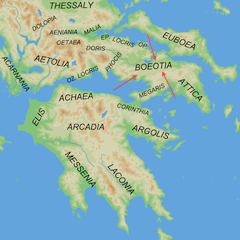
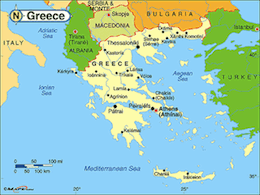
Plutarch’s birth year is given as AD 46. Regards the time when his death occurred, sources dwell on a date after 119. He is believed to have been born to a prominent family in Chaeronea in Boeotia, Greece (arrow-highlighted in the first picture above) and his immediate family (parents, two brothers and a grandfather) as well as extended relations are described as happy and close-knit people. He is recorded as having received a liberal education at the Academy of Athens, studying physics, rhetoric, mathematics, medicine, natural science, philosophy, Greek, and Latin literature. In his effort to bring his education to completion, Plutarch is said to have traveled extensively in Greece and Asia Minor, with visits to Alexandria, Egypt as well (bio.).

There is not much information about this educational philosopher’s wife, other than her name –Timoxena, and her father’s name. While the dates are a blur, one wonders, if it weren’t the deaths of many of his children that prompted Plutarch to his deliberations on theosophy: out of the four sons and one daughter only two sons survived him and his wife. His letter of consolation to Timoxena is most poignant in its mediation to scholars of this prominent world figure’s life-altering events (see cited work section for a link to the entire letter in translation):

AS [sic] for the messenger you dispatched to tell me of the death of my little daughter, it seems he missed his way as he was going to Athens. But when I came to Tanagra, I heard of it by my niece. I suppose by this time the funeral is over. I wish that whatever has been done may create you no dissatisfaction, as well now as hereafter. But if you have designedly left anything alone, depending upon my judgment, thinking better to determine the point if I were with you, I pray let it be without ceremony and timorous superstition, which I know are far from you.

Only dear wife, let you and me bear our affliction with patience. I know very well and do comprehend what loss we have had; but if I should find you grieve beyond measure, this would trouble me more than the thing itself. For I had my birth neither from a stock nor a stone; and you know it full well, I having been assistant to you in the education of so many children, which we brought up at home under our own care. This daughter was born after four sons, when you were longing to bear a daughter, which made me call her by your own name. Therefore I know she was particularly dear to you. […] (Plutarch Letter).

 Plutarch Bust.Priest

[Photo: Free Images Online]

  1. Work

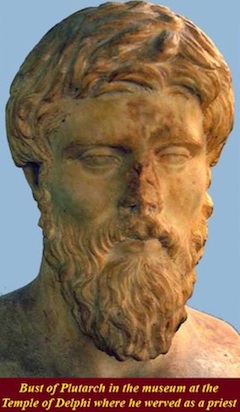
Plutarch’s life was marked with his commitment to education. He is known to have taught in Chaeronea, also lecturing in Rome as well as in other parts of Italy on philosophy and ethics (Stanford Encyclopedia of Philosophy). His Moralia, a collection of his lectures, letters and dialogues offers the reader his treatments of an array of subjects, one of which has my concentrated attention in this essay: Academic philosophy.

It is no irony that a saying, “[c]haracter is destiny[,]” originates from Plutarch – foremost a moralist striving to illustrate the influence of character on destinies of individuals and state. His measurement of character entails conducts in war, in politics, and in love. This key concept of designing the human character stands in direct relation to the discussion at hand. In his ethical prescription for life, Plutarch pronounces the following lesson for his pupils:

There must be a concurrence of three things to produce perfectly right action: nature, reason and habit (PL MOR 1 P9. Ancient/Classical History).

The “habit” to which he refers, reveals the emphasis he places on education’s role in bettering a human being: “Character is habit long continued (PL MOR 1 P13).” His following claim sheds a brighter light on this thought:

So that we might acquire a habit of mind that is deeply trained and philosophic, rather than the sophistic that merely acquires information, let us believe that right listening is the beginning of right living (PL MOR 1 P259).

Where does reason, the third element of Plutarch’s character-building system, then, come into play? He answers as in the following:

When the intelligence of the new student has comprehended the main parts, let us urge him to put the rest together by his own efforts, using his memory as a guide and thinking for himself. The mind does not require filling like a bottle (PL MOR 1 P257).

Any statement he makes in Moralia accentuates his central idea behind the role of education for humanity:

While we take pains that children should eat with the right hand, we take no pains that they should hear the right instruction (PL MOR 1 P23).

The “right instruction” for Plutarch entails character building in his students – candidates for future statesmen. Hence, he fine combs through the conditions of their treatment throughout their learning process:

Children ought to be led to honourable [sic] practices by means of encouragement and reasoning and certainly not by blows or ill treatment (PL MOR 1 P41).

That precise preparation of the circumstances will result in, as he asserts with conviction, the desired makings of history:

Dull minds are content to learn the outcome, or general drift of history. The student fired with love of noble conduct and the works of virtue sees much chance in outcomes and is more delighted with the particulars of history where actions and their causes detail the struggles between virtue and vice (PL MOR 7. P373).

In another section of his Moralia, once again, Plutarch lays dramatic emphasis on what education should not be about – simultaneously, underlining a serious dilemma of our times:

Children must be given some breathing space from continuous tasks; the whole of life is divided between relaxation and application. Rest gives relish to labour [sic] (PL MOR 1 P43).

‘Love for noble labor and the works of virtue’: two vital ingredients today’s educational systems lack at large.

 ~ ~ ~

Next week, Plutarch’s “Treatise on Poetry, History and Education” and on his “Influence.” I hope you will stay tuned for those sections and more to come…

2 Comments

Filed under Reflections

when time stood still

For 8.31.2014 Blog Post.1326030


are you chlostrophobic

you did very well the last time


staples nausea feverishness anxious about that intruder

acutely aware now of that overly tight of a loneliest space

breathing hurts regardless


the better choice, mri not doable, too early to discard the stitches

surgical endoscopy under general anesthesia a must

setback

not major, considering

a setback nevertheless


when have i become this fortunate, dear Drs. C, A, D, P, Thu, S, Tho

to have you circle around me

not giving up

though perplexed from the onset


how do you manage

to turn nighttimes

into bearable patches

you beautiful sweet Ma, A, Me, S, T, D, B, L


and Alice, oh sweet Alice

your aged yet capable body catering to the troubled vessel of mine

those clear-sky-blue gorgeous eyes reading my face with caring intent

you are a unique woman – your soothing voice rises high

it’s the least i can be

amid you wonder-generating women of various ages

after all

when time stood still for me

wrapped in the silence of death

a precious offering from you all would not


love


hülya n yılmaz (August 25, 2014)


2 Comments

Filed under Poetry

…hoping to be back to my Sunday reflections soon…

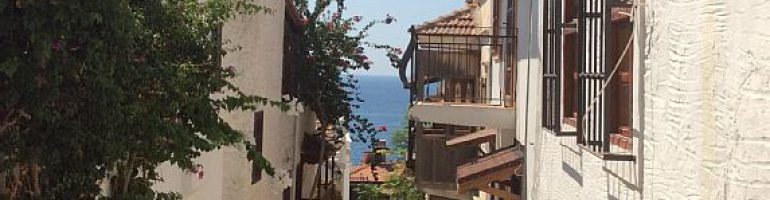
Balkon sefalıklarım

A view of my balcony from my old flat in Sinop, Turkey 

2 Comments

Filed under Home, Reflections

…still gone fishin’

images

4 Comments

August 17, 2014 · 7:00 am

my Sunday reflections…

Dear All,

In two years, yesterday was the first time I had to miss my weekly post for us. I have been sick for quite some time and have been spending all my days in the hospital since Sunday night, August the third – and an estimation of a particular date for matters to be clearing for me is impossible at this point. Today is the first day I am able to tolerate sitting up long enough to write to you about the uncertainty as to when I am going to be able to proceed with my weekly writings.

Wishing you all a great heath-filled time until we meet here again.

With love and in gratitude.

12 Comments

Filed under Reflections

“Whiny”

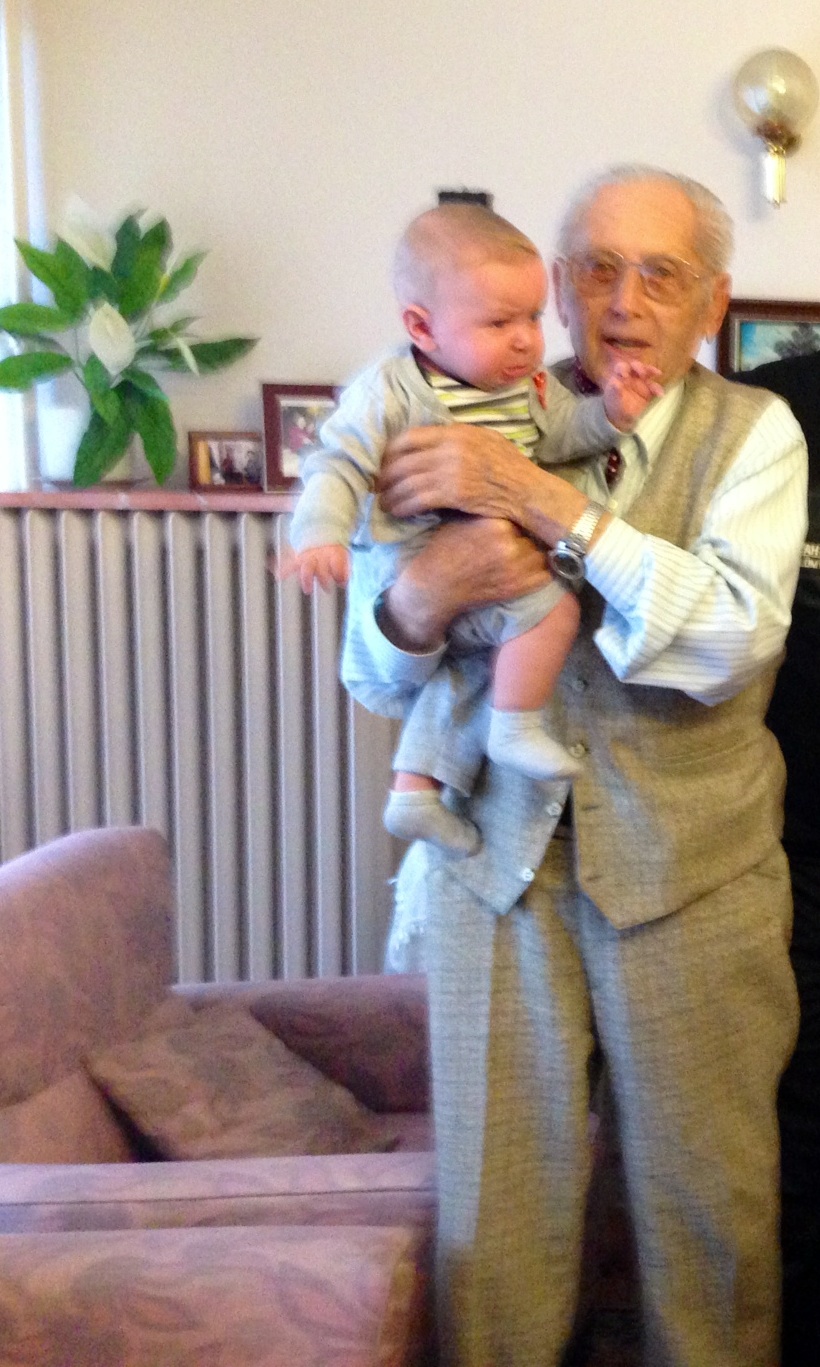
Babamın kucağında.Alişin dudakları bükülü

[Summer 2014, my dad with my grandson in his arms. I must have worn out those arms or hands by insisting for years he’d carry me…Then, when, just once, he gets the chance to hold his great-grandson, the little darling happens to feel not so comfortable as I have for time and time again]

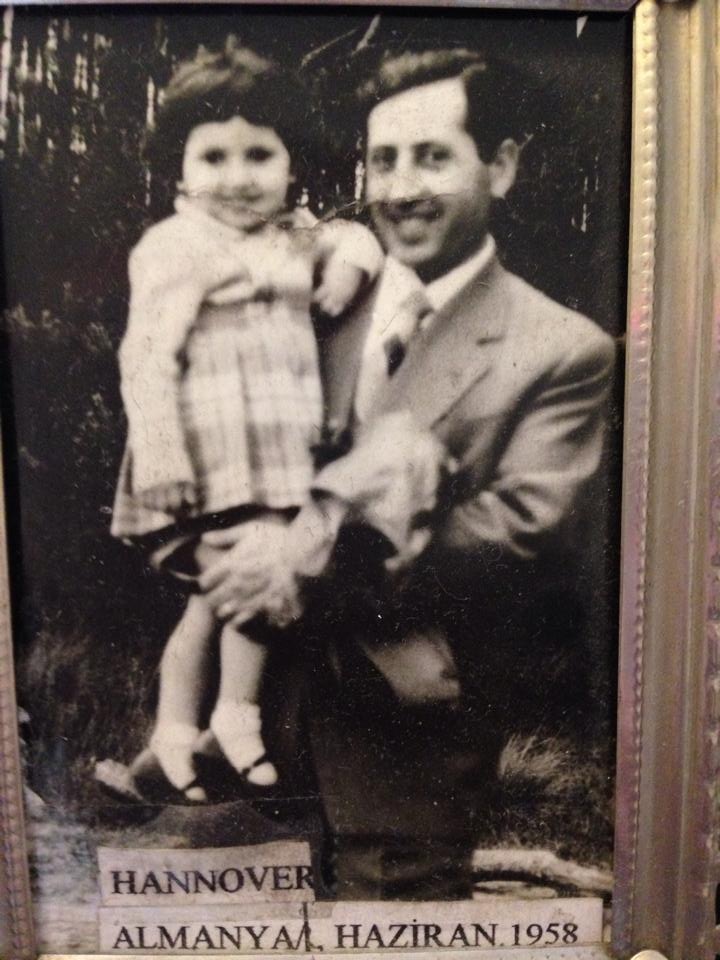
For my 8.3.2014 blog post

[My dad, with a three-year old me in his arms – the date on the photo is original]

Whiny

She died
at 48
I was 25
at each of our phone calls since
your shaky voice sang to me:
“We are behind you always!”

I am 58 now
even became a grandmother
but you know, dad, what I still do?
I keep looking back to see those loving four hands
not touching me not to risk my freedom
just being there, for anytime I might need their tender safety net
and how many times did I let go those slippery ropes
with you lifting me up from the choppy waters I dove into

I see you more and more in my dreams of the late
the way I used to see mom before her death
as if to sense my growing fear
this Bayram you told me the story of your family-side’s luck
how they “make it” to a rather late age…

One pair of hands have been gone for long
though you kept them close to your side all along
What am I to do, dad,
if the other pair is no longer behind me always?

hülya n yılmaz (© August 1, 2014)

3 Comments

Filed under Poetry

40 cents…

images

CAUTION: DETAILS IN THE PICTURE, SUCH AS AN ACTUAL BOOTH OR A PERSON STANDING GUARD  MAY NOT BE FOUND IN OTHER AREAS. KINDLY LOOK FOR A HELPING HAND ELSEWHERE.


url


WE ARE SORRY FOR NOT HAVING THIS BANKING OPTION AVAILABLE WHERE YOU MAY NEED IT THE MOST. KINDLY LOOK FOR A HELPING HAND ELSEWHERE. 


I am on my way back from a trip to Richmond, VA where I had a book reading. All having gone well beyond my expectations…until I hit some more of the toll plazas: I am out of cash. I don’t mean only out of small change: There is no cash left on me! While in Richmond, turnpikes/toll area were offering “Full Service” or there would be a live person inside the booth. Not at all the case around here. (In my own defense for my ill-preparedness: I have been living happily ever after in the lovely small town where I settled about 12 years ago, and haven’t exactly experimented with many turnpike or toll plaza zones since…)

There are only two lanes this time. No multiple “Cash Only”s or “EZPASS Only”s. The image above – minus what appears to be a real person’s hand reaching outside the booth – is quite accurate to describe my reality (in my case, what seemed to be once a booth gave back a rather eerie look at me, from behind pitch-dark windows – there was no movement). My evil-eye small change purse had handed over its last emergency account of 40 cents where that last toll plaza had surprised me (jointly with my dysfunctional TomTom and equally dysfunctional iPhone App). As for all other cents and dollars, they were emptied prior…This one expects 70 cents. I have 30 cents left in another small change purse (who knows why I keep around in my car), though all in pennies but at least, it is close to half the amount needed. I’m off to hunt for my remaining 40 cents.

My car – however small it may be – is now comfortably squeezed somewhere adjacent to the missing booth vicinity, fully blocking the way for other drivers. A motorcyclist zooms by the EZPASS section. ‘Wow,’ I conclude in amazement, ‘how fast can these passes be scanned these days?’ (Have I stressed one detail yet? This area is rather deserted…)

At this point in time, only one car bumper makes a pass at that of mine but soon after another vehicle is heard, one that decides to become intimate friends with the car right behind me. Too close for comfort for everyone…I dare to peek from my rear-view mirror: there is only one person sitting in the car right behind mine, and that’s the driver. I conclude in hope: he will know what I am going through right now. A fellow traveler but also one who goes solo. I get out of my car, approach his driver-side door (at least he rolls down the window, although looking at me as if I were a giraffe or four elephants leaving that tiny car in front of him): not even a question, such as, maybe just maybe, do I need anything, am I hurt (since I look the part, thanks to my family-size eye infection). Not yet discouraged, I explain my situation to him as quickly as I can (if not, he may just drive over my little red and won’t care about leaving any tire prints, I fear…). Still no reaction whatsoever. His eyes on mine, he makes a head gesture which I am left to translate as “see, if I care!” Only one thing is there for me to do and I gather up the courage to follow it through: “Sir, in that case could you please back up your car so that I can get mine out of everyone’s way?” Nothing. No response (he spoke a very clear English with me before – well, it was a mumbling sound but in perfect English regardless…)

I then walk over toward the car behind him (I spot at least two heads – it’s evening hours and the sun is setting modestly, instead of shining directly into my already compromised eye sight…thanks to my infected eye…). The window slowly comes down. No question. No visible reaction. So, I have to speak first again: “I need 70 cents but have only 30 left and there is no full service here, as you can see. No one is in the booth. Would it be possible…” – The man on the passenger side is quick to respond to me but only by telling me how fast he has to … go to a bathroom (though he uses less imaginative words). I apologize for keeping them there and think about offering them a copy of my $22.95 worth book from the trunk of my car in place of their 40 cents. I don’t dare. What if they think I am a nutcase? The driver feels urged to add his few cents worth: “70 cents. It’s only 70 cents!” He is in disbelief that I don’t have that amount of money on me…

I can tell they are both getting upset at the fact that I am so clueless as to not keep a load of change with me – in case another toll plaza decides to appear with no full service no booth-person before the unsuspecting driver that I am that day. I am ready to turn around to go back to my car but have to ask them to please back up their car, so that the one behind me can back up his…etc. They keep waiting for me to finish one sentence after another. Perhaps, until the passenger is capable of announcing to my face with a growing smirk a piece of wisdom anyone should forever be thankful for: “We all gotta go somewhere.” Hmm. Really?

While I act the stupid that I am at the moment, still hoping to hear a word, any word of sympathy or question of concern (perhaps, my eye infection scared them so…it could, after all, turn into a fatal weapon), both drivers finally back up their cars. And I park mine on the far right side – away from any approaching cars, in case my luck changes. To my surprise, the second car’s driver makes a (far far far far far less than half-hearted) swerve toward me, his passenger takes out his hand and shouts at me with an owner-to-unwanted dog-attitude: “Do you want a quarter?”

Thankfully, I can manipulate my face from over-friendly to somewhat of a “don’t mess with me” expression whenever I have to…

And I wait. Making no record of how much time passes. Nor showing any interest whatsoever in keeping such a record. An SUV approaches the booth-person-less booth area. I don’t even need to signal to this driver, the car slows down on its own. Encouraged, I leave my car and approach it. Two people are in it, one man one woman about my age. The man is driving. Before I can even finish my sentence to explain my dilemma, they both reach into a box (or something) and take cash out to give it to me. I thank them – probably, way too many times, so the man gives me a smile with a kind reassurance: “It is 40 cents.”

Fresh in my mind how three other adults treated me in the same situation, I thank both of them several times again. Actually, what they don’t know is how much I want to hug this couple. I restrain myself from doing so for fear that such show of affection could be misunderstood at my age…But the truth is, they found me at a vulnerable mindset, after all,  just when I was feeling abandoned right there and then by humanity at large. As for my ‘please adopt me’ face, that must have seemed to them as something they would prefer not to use at this stage of their lives…

When I asked how I could ever return their favor, giving me embracing eye-smiles, they sent me off to have ‘safe travels’ because that outcome would be my thanks to them.


6 Comments

Filed under Reflections

Second year of blogging…

103403


Good Sunday, dear friends of the reading and writing arts!

WordPress.com congratulates me for “flying” with them. I want to resound their note in a modified way, and thank you from the heart for having been here all this time and for still being here. Your visits and comments are what encouraged and inspired me to write on a regular basis, an interaction with you that I have enjoyed so much, and continue to take great pleasure in. Please feel free to let me know, as to what, in particular, you had liked in the past among my writings. I would appreciate your input with enthusiasm.

As always, I look very much forward to your next visit. May you have a wonderful Sunday and an equally remarkable new week!

hülya


5 Comments

Filed under Reflections

Supporting the Written Art and Schlow Centre Region Library in State College, PA

[CAUTION: An unedited text lies ahead of you…]


I find the back entrance, park my car where the gate opening gadget used to be, leave the flashers on and unload what I had packed from the night before. Confident that I have thought of everything. I raise my head from my carry-on luggage piece and … am tempted to go right back into my cute red: under the huge tent, every table looks decorated as if touched by a long-time stager, with eye-catching presentation materials everywhere. I pass by the line of tables in slow motion, looking right, looking left, not sure where I am supposed to be heading. Someone who hasn’t skipped a beat to notice who knows what my face looked like, asks me whether I am ____ ( a name other than mine), before I get a chance to answer, a friendly voice rises from the area that I now left behind me: “You are with me!” Her demeanor matches the friendliness of her vocal cords…I make a legal U-turn and am at my table section. She and I will be sharing a table. She has already set up her side, as have anyone whom I can spot from where I am standing. Every time I use the phrase “set up”, please replace it with “donning grandiose details and special effects.” Yes, we have all received the same timely and kind tip as to what to display on our tables. It is obvious: I am the only one who disregarded those well-meant suggestions….Shaking my initial surprised look, I put all that I brought with me on my side of the four-legged multi-purpose platform. “All that” doesn’t amount to much…I see…and can’t deny anymore: I’m ill-prepared. I have only copies of my book and business cards. If it hadn’t been for my dear publisher’s recommendation – my book’s cover as a blown-up poster, stoppers-by or intentional visitors would have easily dismissed me along with those beautiful print products I have my name on. I am petite as it is…

After my initial culture shock wears off (it is my first entry to this part of our world), my two neighboring authors and I start chatting before the crowd comes in: they are both delightful and comforting! It is taking me a while but I begin to stop worrying about what I don’t have with or on me for the potential visitors to my side (such as those attention-getting giveaways, colorful decorations, and prizes all around me). These two beautiful women take me away from my short-lived worries thanks to their calm and calming personalities and their voluntary talks on the genres they specialize in. I learn new things from them also about their experiences in the writing arena. We agree it is a long-time fasting lion-to-unarmed bare-footed-weeks-long-trekking-newborn-place out there. We commiserate – about the state of the various literary genres in our century and how we are subjected to a distinct level of degeneration in the overall interest of the readers (it just wouldn’t do, if we didn’t!) But then we laugh, hard; comment about our expectations for our books’ sales of today – a beautiful day (no storms, not even a mist of rain), critique and analyze ourselves, our passions for writing, and laugh again – best of all, we celebrate. The opportunities we have in our hands; our understanding of and support for one another. Other authors approach our tables and we all communicate, as if we had known one another for our entire lives. At least from my end, this experience is a true pleasure and gives itself in full submission to us as a most memorable time. What display items? What more do I need, I ask myself while no one is looking…

A short while later, my friends arrive and surround me with their “pride” talks directed at “my” event, taking pictures I could not have taken on my own to mark this special occasion in my life (nor would have asked someone else to do). Once again, I laugh – from the core of my being, we hug and (content with how I have been managing myself), they leave to see the rest of the Arts Festival tents and booths. In the early afternoon, another dear friend of mine comes over – despite the fact that she has so much on her tray these days. Finally, my One and Only – my daughter/only child, walks into the tent, pushing my grandson’s stroller, completing my understanding of perfection…

On my way back to my car, my steps feel on water, gliding me away – although I am exhausted from a day quite unusual in its length, intensity and activities. Why my dance-like one-foot-in front of-the other-attitude? For this BookFest hasn’t been about selling books at all! It was rather about exchanging positive energy between people who happen to be readers of this or that genre, making time to meet other people who happen to be writers of such or the other genre. All of whom were ready and willing to connect to one another over one area of their lives, asking and answering questions and laughing together. It was about authentic interaction between people. Period.

My first BookFest.Tek Başıma.July 12.2014

May your Sunday and your new week become a memorable delight for you.


1 Comment

Filed under Reflections